Classificazione / Nomi
Nomi Comuni | Sinonimi | Catalog of Fishes(Genere, Specie) | ITIS | CoL | WoRMS | Cloffa
>
Gobiiformes (Gobies) >
Gobiidae (Gobies) > Gobionellinae
Etymology: Schismatogobius: Greek, schisma, -atos = crack, fissure + latin, gobius = gudgeon (Ref. 45335); vitiensis: Named for Viti (Fijian language for Fiji) and the Latin suffix -ensis, meaning from or of Fiji.
Ambiente: milieu / zona climatica / distribuzione batimetrica / gamma di distribuzione
Ecologia
; acqua dolce demersale; pH range: 6.1 - 6.3; distribuzione batimetrica 0 - 1 m (Ref. 55545). Tropical; 23°C - 26°C (Ref. 55545)
Oceania: Fiji.
Dimensione / Peso / Età
Maturità: Lm ? range ? - ? cm
Max length : 4.1 cm SL maschio/sesso non determinato; (Ref. 55545)
Breve descrizione
Chiavi di identificazione | Morfologia | Morfometria
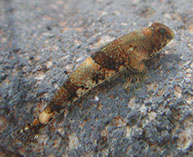
Spine dorsali (totale) : 7; Raggi dorsali molli (totale) : 9 - 10; Spine anali: 1; Raggi anali molli: 8 - 9. Distinguished from all other members of the genus by the following combination of characters: 8-9 anal rays; dorsal fins with VI - I,9-10 rays; first dorsal fin with a diagonal black band; females with a thin dark band crossing the chin; juvenile females with a triangular dark patch in region of isthmus; orange pigmentation on dorsal surface of body, and caudal and pectoral fin bases in both juveniles and adults; light blue or turquoise mottling on the head, nape and dorsal surface; sexually dimorphic head morphology (% HL), head lengths similar, males with 5% greater eye diameter and 30% greater lower jaw length, females with 5% greater snout length, 7% greater post orbital length and 6 % greater head width; sexually dimorphic fin morphology (% SL), males with 5% larger first dorsal fin base and females with 7% larger pectoral and 5 % larger pelvic fins (Ref. 55545).
Body shape (shape guide): fusiform / normal.
Seems to prefer shallow and clear water riffles with slow or moderate current speed and with a substrate of small boulders and gravel (Ref. 55545).
Ciclo vitale e comportamento di accoppiamento
Maturità | Riproduzione | Deposizione | Uova | Fecondità | Larve
Jenkins, A. and D. Boseto, 2005. Schismatogobius vitiensis, a new freshwater goby (Teleostei: Gobiidae) from the Fiji Islands. Ichthyol. Explor. Freshwat. 16(1):75-82. (Ref. 55545)
Stato della Lista Rossa IUCN (Ref. 130435: Version 2025-2 (Global))
Minaccia per l'uomo
Harmless
Usi umani
Strumenti
Rapporti speciali
Scarica XML
Fonti Internet
Stime basate su modelli
Indice di diversità filogenetica (Fonte Biblio.
82804): PD
50 = 0.5000 [Uniqueness, from 0.5 = low to 2.0 = high].
Bayesian length-weight: a=0.01023 (0.00452 - 0.02316), b=3.00 (2.81 - 3.19), in cm total length, based on LWR estimates for this (Sub)family-body shape (Ref.
93245).
Livello trofico (Fonte Biblio.
69278): 3.2 ±0.5 se; based on size and trophs of closest relatives
Resilienza (Fonte Biblio.
120179): Alto, tempo minimo di raddoppiamento della popolazione meno di 15 mesi (Preliminary K or Fecundity.).
Vulnerabilità della pesca (Ref.
59153): Low vulnerability (10 of 100).
🛈