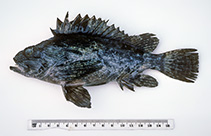
Environnement : milieu / zone climatique / profondeur / gamme de distribution
Écologie
marin; eau douce; saumâtre démersal; catadrome (Ref. 51243). Temperate; 10°C - 30°C (Ref. 2060); 10°S - 38°S
Oceania: Queensland and New South Wales, Australia.
Taille / Poids / Âge
Maturité: Lm ? range ? - ? cm
Max length : 30.0 cm SL mâle / non sexé; (Ref. 44894); common length : 20.0 cm SL mâle / non sexé; (Ref. 44894)
Occur in freshwater streams and brackish shore areas. Inhabit still or gently flowing freshwater streams over rock, mud or gravel, a bottom-dwelling fish. Usually found near aquatic vegetation or woody debris. During rainy periods, may migrate downstream into estuaries, but they normally frequent fresh water. Relatively sedentary species, spending majority of their time stationary on the bottom or among weeds waiting for prey. Breed in fresh water, as juveniles have been collected from the upper reaches of rivers, including impoundments. Both adults and juveniles have venomous dorsal, anal and pelvic spines and therefore should not be handled (Ref. 44894).
Cycle de vie et comportement reproducteur
Maturité | Reproduction | Frai | Œufs | Fécondité | Larves
Paxton, J.R., D.F. Hoese, G.R. Allen and J.E. Hanley, 1989. Pisces. Petromyzontidae to Carangidae. Zoological Catalogue of Australia, Vol. 7. Australian Government Publishing Service, Canberra, 665 p. (Ref. 7300)
Statut dans la liste rouge de l'IUCN (Ref. 130435: Version 2025-2 (Global))
Utilisations par l'homme
Outils
Articles particuliers
Télécharger en XML
Sources Internet
Estimations basées sur des modèles
Indice de diversité phylogénétique (Réf.
82804): PD
50 = 1.0000 [Uniqueness, from 0.5 = low to 2.0 = high].
Bayesian length-weight: a=0.01905 (0.00773 - 0.04699), b=3.03 (2.82 - 3.24), in cm total length, based on LWR estimates for this (Sub)family-body shape (Ref.
93245).
Niveau trophique (Réf.
69278): 3.1 ±0.46 se; based on food items.
Résilience (Réf.
120179): Très faible, temps minimum de doublement de population supérieur à 14 ans (Preliminary K or Fecundity.).
Vulnérabilité de la pêche (Ref.
59153): Low to moderate vulnerability (27 of 100).
🛈