>
Gobiiformes (Gobies) >
Gobiidae (Gobies) > Gobiinae
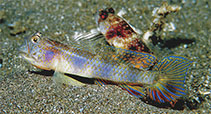
Etymology: papilio: Name from Latin 'papilio' meaning butterfly, used as the generic name of the swallowtail butterfly, refers to the elongate, filamentous fifth and ninth branched caudal-fin rays (like the 'tails' of the swallowtail butterfly); noun in apposition.
Eponymy: Professor Cornelius Jan van der Horst (1889–1951) was a Dutch zoologist who moved to South Africa (1928) and became Head of the Zoology Department, Witwatersrand University, Johannesburg. [...] (Ref. 128868), visit book page.
Entorno: milieu / zona climática / rango de profundidad / gama de distribución
Ecología
marino demersal; rango de profundidad 5 - 55 m (Ref. 90102). Temperate
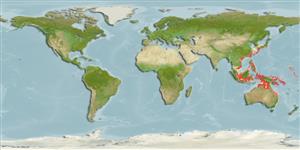
Northwest Pacific: Ryukyu Is., Japan.
Tamaño / Peso / Edad
Madurez: Lm ? range ? - ? cm
Max length : 4.1 cm SL macho / no sexado; (Ref. 55718)
Descripción breve
Claves de identificación | Morfología | Morfometría
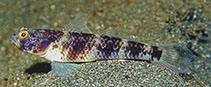
Espinas dorsales (total) : 7; Radios blandos dorsales (total) : 11; Espinas anales: 1; Radios blandos anales: 11; Vértebra: 26. This species is distinguished from its congeners in having the following set of characters: segmented dorsal-fin rays 11; segmented anal-fin rays 11; longitudinal scales 27; predorsal scales 11; third spine of first dorsal fin elongate, filamentous, and longer than the other spines; fifth and ninth branched caudal-fin rays elongate, filamentous, and forming bifurcate caudal fin; fifth and ninth branched rays each with a single branch; cephalic sensory-papillae row 'a' with 3 widely spaced papillae; numerous small yellow spots scattered on cheek, operculum, nape, body, and dorsal fins in fresh or live individuals; below the eye is a dusky yellowish brown vertical bar; body with 4 dark gray brown saddles, in addition to a similarly colored large blotch at midlateral caudal-fin base (Ref. 55718).
Body shape (shape guide): elongated.
A single specimen collected from a sandy-mud bottom at a depth of 45 m in a protected bay. Observed to be usually at 40-50 m depths (area with pebbles); the young at depths of 8 m to about 30 m, but apparently on rare occasions; the species symbiotically associates with alpheid shrimp (species name uncertain) (Ref. 55718).
Ciclo vital y comportamiento de apareamiento
Madurez | Reproducción | Puesta | Huevos | Fecundidad | Larva
Shibukawa, K. and T. Suzuki, 2004. Vanderhorstia papilio, a new shrimp-associated goby from the Ryukyu Islands, Japan (Perciformes: Gobiidae: Gobiinae), with comments on the limits of the genus. Ichthyol. Res. 51:113-119. (Ref. 55718)
Situación en la Lista Roja de la UICN (Ref. 130435: Version 2025-2 (Global))
Amenaza para el ser humano
Harmless
Usos humanos
Herramientas
Informes especiales
Descargar XML
Fuentes de Internet
Estimaciones basadas en modelos
Temperatura preferida (Referencia
123201): 23.6 - 28.9, mean 27.9 °C (based on 202 cells).
Índice de diversidad filogenética (Referencia
82804): PD
50 = 0.5000 [Uniqueness, from 0.5 = low to 2.0 = high].
Bayesian length-weight: a=0.00741 (0.00347 - 0.01582), b=3.09 (2.91 - 3.27), in cm total length, based on LWR estimates for this (Sub)family-body shape (Ref.
93245).
Nivel trófico (Referencia
69278): 3.2 ±0.3 se; based on size and trophs of closest relatives
Resiliencia (Referencia
120179): Alto, población duplicada en un tiempo mínimo inferior a 15 meses (Preliminary K or Fecundity.).
Vulnerabilidad pesquera (Ref.
59153): Low vulnerability (10 of 100).
🛈