>
Anguilliformes (Eels and morays) >
Congridae (Conger and garden eels) > Congrinae
Etymology: Bathycongrus: Greek, bathys = deep + Latin, conger = conger (Ref. 45335); unimaculatus: The name of the species unimaculatus was formed from the Latin words unus (îne) and
macula (spît) (Ref. 80682).
Milieu: milieu / Klimaatzone / Diepte / verspreidingsgebied
Ecologie
marien benthopelagisch; diepte 430 - 480 m (Ref. 86942), usually 430 - 450 m (Ref. 80682). Tropical; 22°S - 23°S, 167°E - 168°E
New Caledonia, southern Loyalty Basin (Ref. 80682).
Grootte / Gewicht / Leeftijd
Maturiteit: Lm ? range ? - ? cm
Max length : 28.3 cm TL mannelijk / geslacht onbekend; (Ref. 80682)
Korte beschrijving
Determinatiesleutels | Morfologie | Morfometrie
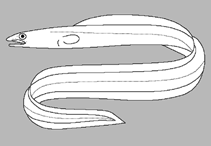
A moderately elongated, small congrid eel of the genus Bathycongrus with a tapering tail,
obtuse conical multiserial vomerine teeth of approximately the same size and a dark long spot on the posterior part of the anal fin. The snout is short, slightly longer than the eye diameter. The dorsal fin origin is under the end of the pectoral fins. Vert. 137, precaudal vertebrae 40. Lateral line pores in front of the anal opening 30 (Ref. 80682).
Body shape (shape guide): eel-like.
Levenscyclus en paargedrag
Maturiteit | Voortplanting | Paaien | Eieren | Fecunditeit | Larven
Karmovskaya, E.S., 2009. New records of congrid eels of the genus Bathycongrus (Congridae) in the West Central Tropical part of the Pacific Ocean, with a description of three new species. J. Ichthyol. 49(2):139-153. (Ref. 80682)
Status op de Rode Lijst van het IUCN (Ref. 130435: Version 2025-2 (Global))
Gevaar voor de mens
Harmless
Gebruik door de mens
Tools
Speciale rapporten
Download XML
Internetbronnen
Schattingen op basis van modellen
Fylogenetische diversiteitsindex (Ref.
82804): PD
50 = 0.5000 [Uniqueness, from 0.5 = low to 2.0 = high].
Bayesian length-weight: a=0.00062 (0.00029 - 0.00132), b=3.19 (3.01 - 3.37), in cm total length, based on LWR estimates for this (Sub)family-body shape (Ref.
93245).
Trofisch niveau (Ref.
69278): 3.7 ±0.5 se; based on size and trophs of closest relatives
Weerstandsvermogen (Ref.
120179): Hoog, minimale populatieverdubbelingstijd minder dan 15 maanden (Preliminary K or Fecundity.).
Kwetsbaarheid van de visserij (Ref.
59153): Low vulnerability (18 of 100).
🛈