>
Characiformes (Characins) >
Anostomidae (Headstanders)
Etymology: Leporinus: Latin, lepus, leporis = rabbit (Ref. 45335); unitaeniatus: The specific name unitaeniatus is an adjective in reference to the single, slender and horizontal dark brown stripe on the lateral line of this species.
Entorno: milieu / zona climática / rango de profundidad / gama de distribución
Ecología
; agua dulce bentopelágico. Tropical
South America: Rios Araguaia and Tocantins in Brazil.
Tamaño / Peso / Edad
Madurez: Lm ? range ? - ? cm
Max length : 12.5 cm SL macho / no sexado; (Ref. 80692)
Descripción breve
Claves de identificación | Morfología | Morfometría
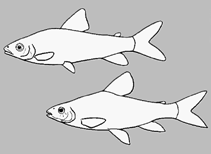
Radios blandos dorsales (total) : 10 - 11; Radios blandos anales: 9. Differs from other congeners by the following characters: one longitudinal narrow brown stripe running along lateral line, light brown on the first 10-11 scales after opercular opening and dark brown along the posterior remaining scales of lateral line; 11-13 short transverse dark brown bars on dorsum meeting small dark brown blotches; snout length 38.4 to 50.6% in head length; orbital diameter 24.6 to 30.9% in head length; body depth 17.7 to 24.6% of SL; sub- inferior mouth (inferior margin of superior lip horizontally aligned with the inferior margin of orbit); teeth elongated incisive-like and with a fine and straight cutting edge decreasing in size like the steps of stairs from teeth pair of jaw symphysis; 4/4 teeth on each premaxillary and dentary; 42 to 44 scales in the lateral line, 6 scales series above and 5 under the lateral line on the transverse line and 16 circumpeduncular series of scales (Ref. 80692).
Body shape (shape guide): elongated.
Distinct pairs breed on densely grown weedy places (Ref. 205).
Ciclo vital y comportamiento de apareamiento
Madurez | Reproducción | Puesta | Huevos | Fecundidad | Larva
Distinct pairs breed on densely grown weedy places (Ref. 205).
Garavello, J.C. and G.M. Santos, 2009. Two new species of Leporinus Agassiz, 1829 from Araguaia-Tocantins system, Amazon basin, Brazil (Ostoriophysi, Anostomidae). Brazilian J. Biol. 69 (1):109-116. (Ref. 80692)
Situación en la Lista Roja de la UICN (Ref. 130435: Version 2025-2 (Global))
Amenaza para el ser humano
Harmless
Usos humanos
Herramientas
Informes especiales
Descargar XML
Fuentes de Internet
Estimaciones basadas en modelos
Índice de diversidad filogenética (Referencia
82804): PD
50 = 0.5000 [Uniqueness, from 0.5 = low to 2.0 = high].
Bayesian length-weight: a=0.01230 (0.00687 - 0.02202), b=3.14 (2.99 - 3.29), in cm total length, based on LWR estimates for this species & Genus-body shape (Ref.
93245).
Nivel trófico (Referencia
69278): 2.5 ±0.1 se; based on size and trophs of closest relatives
Resiliencia (Referencia
120179): Alto, población duplicada en un tiempo mínimo inferior a 15 meses (Preliminary K or Fecundity.).
Vulnerabilidad pesquera (Ref.
59153): Low vulnerability (10 of 100).
🛈