Ταξινόμηση / Ονόματα
Κοινά ονόματα | Συνώνυμα | Catalog of Fishes(Γένος, Είδη) | ITIS | CoL | WoRMS | Cloffa
Taxonomic Remarks
This species may be a synonym of L. richardsoni, the lower number of trunk myomeres in the former reflecting a latidutinal cline. This requires further investigation.
Περιβάλλον: περιβάλλον / κλιματική ζώνη / εύρος βάθους / εύρος διανομής
Οικολογία
; Γλυκού νερού βενθικό(ς); μη μεταναστευτικό(ά). Temperate
North America: USA, restricted to Columbia River drainage, Oregon,
Μέγεθος / Βάρος / Ηλικία
Γεννητική Ωρίμανση: Lm ? range ? - ? cm
Max length : 17.5 cm TL αρσενικό/απροσδιόριστο; (Ref. 89241); common length : 12.5 cm TL αρσενικό/απροσδιόριστο; (Ref. 12193)
Σύντομη περιγραφή
Κλείδες προσδιορισμού | Μορφολογία | Μορφομετρία
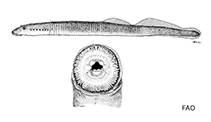
Adults: 9.8-17.5 cm TL. Body proportions, as percentage of TL (based on 39 specimens measuring 9.8-17.3 cm TL): prebranchial length, 8.9-12.8; branchial length, 8.9-11.3; trunk length, 44.7-53.5; tail length, 24.3-35.0; eye length, 1.4-3.0; disc length, 4.1-7.2. Urogenital papilla length, as a percentage of branchial length, in ten spawning males measuring 11.2-13.3 cm TL, 17.8-36.4. Trunk myomeres, 53-58. Dentition: supraoral lamina, 2 unicuspid teeth; infraoral lamina, 6-9 unicuspid teeth, usually 8; usually 3 endolaterals on each side, occasionally 2 on one side; endolateral formulae highly variable with the first two teeth 1-3 and the third 1-2; 1-2 rows of anterials; first row of anterials, 6 unicuspid teeth (in spawning specimens, the teeth in the anterior field may be lost); exolaterals absent; posterials absent; transverse lingual lamina, undetermined number of minute unicuspid teeth on either side of an enlarged median one; longitudinal lingual laminae cusps too small to count. Velar tentacles, 3-6, with tubercles. Body coloration (preserved), dark gray on dorsal and lateral aspects, whitish on ventral aspect. Lateral line neuromasts unpigmented. Extent of caudal fin pigmentation, 1% to <25% (in prespawning individuals) or, 75% or more (in spawning individuals). Fleshy tissues around the lingual laminae darkly pigmented. Caudal fin shape, rounded. Oral fimbriae, 83 (holotype).
Body shape (shape guide): eel-like.
Freshwater; creeks and rivers. Metamorphosis occurs in October in Oregon and California.
Adults nonparasitic. Based on the dates of collection of spawning individuals in the original description, the spawning period probably occurs between mid-April and August in Oregon, while in California spawning probably occurs between the end of April and the beginning of May (Ref. 89241).
Κύκλος ζωής και συμπεριφορά ζευγαρώματος
Γεννητική Ωρίμανση | Αναπαραγωγή | Γεννοβολία | Αβγά | Γονιμότητα | Προνύμφες
Renaud, C.B., 2011. Lampreys of the world. An annotated and illustrated catalogue of lamprey species known to date. FAO Species Catalogue for Fishery Purposes. No. 5. Rome, FAO. 109 pp. (Ref. 89241)
Κατάσταση Κόκκινου Καταλόγου IUCN (Ref. 130435: Version 2025-2 (Global))
Απειλή για τον άνθρωπο
Harmless
Ανθρώπινες χρήσεις
Εργαλεία
Ειδικές εκθέσεις
Λήψη XML
Διαδικτυακές πηγές
Εκτιμήσεις βάσει μοντέλων
Δείκτης φυλογενετικής ποικιλότητας (Αναφ.
82804): PD
50 = 0.6250 [Uniqueness, from 0.5 = low to 2.0 = high].
Bayesian length-weight: a=0.00132 (0.00060 - 0.00290), b=2.99 (2.80 - 3.18), in cm total length, based on LWR estimates for this (Sub)family-body shape (Ref.
93245).
Τροφικό Επίπεδο (Αναφ.
69278): 3.8 ±0.8 se; based on size and trophs of closest relatives
Ελαστικότητα (Αναφ.
120179): Χαμηλό, ελάχιστος χρόνος για διπλασιασμό πληθυσμού 4,5 - 14 έτη (Semelparous species, assuming tm (= tmax) > 4).
Ευπάθεια στην αλιεία (Ref.
59153): Low vulnerability (10 of 100).
🛈