การจำแนกประเภท / ชื่อ
ชื่อสามัญ | ชื่อพ้อง | Catalog of Fishes(สกุล, ชนิด) | ITIS | CoL | WoRMS | Cloffa
>
Gobiiformes (Gobies) >
Gobiidae (Gobies) > Gobiinae
Etymology: Discordipinna: Latin, discors = to disagree + Latin, pinna = fin, wing (Ref. 45335); filamentosa: Name from Latin 'filamentum' meaning the thread-like elongation of fin; referring to its diagnostic feature, the very thin and long extension of the anterior two spinous rays of first dorsal fin.
สิ่งแวดล้อม : สิ่งแวดล้อม / เขตภูมิอากาศ / ระดับความลึก / ระยะการกระจายสินค้า
นิเวศวิทยา
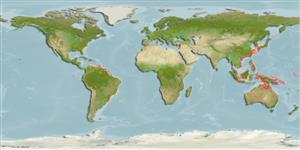
เกี่ยวกับทะเล,น้ำเค็ม เกี่ยวกับหินโสโครก; ระดับความลึก 30 - 82 m (Ref. 90871). Subtropical
Western Pacific: Japan and Malaysia.
ขนาด / น้ำหนัก / อายุ
วัยเจริญพันธุ์: Lm ? range ? - ? cm
Max length : 1.6 cm SL เพศผู้/กระเทย; (Ref. 90871)
คำอธิบายสั้นๆ
เครื่องมือที่ใช้ในการแยกชนิดสัตว์,สิ่งมีชีวิตออกจากกัน | สัณฐานวิทยา | ความยาวต่างๆ
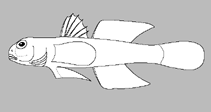
เงี่ยงครีบหลัง (รวม) : 7; ก้านครีบอ่อนที่หาง (รวม) : 8; เงี่ยงครีบก้น: 1; ก้านครีบอ่อนที่ก้น: 8; สัตว์มีกระดูกสันหลัง: 26. Discordipinna filamentosa can be distinguished from D. griessingeri by the following unique set of features: D VI (vs. V), first dorsal fin with the longest, filamentous first ray in male extending far beyond caudal fin base when depressed (vs. second ray of dorsal-fin base longest in male); pectoral fin rays 16 (vs. 17-20); longitudinal scale rows 26; predorsal naked; transverse scale rows 8; dorsal pterygiophore formulae 3/122101/9 (vs. 3/41001/8); vertebrae 10 + 16 = 26; with loosely arranged, longitudinal pattern of infraorbital papilla and anterior oculoscapular canal present (with median pore ? singular on middle of interorbital region, lateral section as pores ?, ? and ?) and preopercular canal (with three pores ?, ? and ?), lacking posterior oculoscapular canal; body generally creamy white; head with a snow-white oblique band from upper lip to upper part of opercle; scattered tiny, densely-set tiny orange to brown spots on dorsal side of snout; 3 lateral, oblique orange to brown bands which generally fused ventrally on trunk; lateral body with 4-5 thin longitudinal yellow stripes; first dorsal fin yellow with 12 major transverse deep brown bands mainly on filamentous portion of the fin (vs. entirely orange red) and an oval translucent mark on basal portion of that; second dorsal fin yellow with about 4 rounded gray blotches each having a central deep black spot against yellow background; caudal fin yellow with a shallow 'C' shaped snow white mark basally and several round deep black spots on upper half; anal and pelvic fins are entirely deep black (vs. with lower 2/3 region orange red and upper 1/3 region translucent); pectoral fin with a snow-white wedge (Ref. 90871).
Body shape (shape guide): elongated; Cross section: oval.
Collected from the deepwater trawling of up to 82 m. Observed through scuba diving and current trawl specimen record, that the species seems to live in 30 to 82 m depth water with substratum of coral-reef hard debris (Ref. 90871).
วงจรชีวิตและพฤติกรรมการผสมพันธุ์
วัยเจริญพันธุ์ | การสืบพันธุ์ | การวางไข่ | เซลสืบพันธ์ของเพศเมีย(ไข่) | ความดกของไข่ | ตัวอ่อน
Chen, I.-S., T. Suzuki and K.-T. Shao, 2012. A new deepwater goby of the genus Discordipinna Hoese & Fourmanoir, 1978 (Teleostei: Gobiidae) from Kumejima of the Ryukyus, Japan. Zootaxa 3367:274-280. (Ref. 90871)
สถานะบัญชีแดงของ IUCN (Ref. 130435: Version 2025-2 (Global))
ภัยคุกคามต่อมนุษย์
Harmless
การใช้ของมนุษย์
การประมง: bycatch
เครื่องมือ
รายงานพิเศษ
ดาวน์โหลด XML
แหล่งที่มาจากอินเตอร์เน็ต
การประมาณค่าตามแบบจำลอง
อุณหภูมิที่ต้องการ (อ้างอิง
123201): 21.7 - 28.1, mean 27.1 °C (based on 98 cells).
ดัชนีความหลากหลายทางวิวัฒนาการ (อ้างอิง
82804): PD
50 = 0.7500 [Uniqueness, from 0.5 = low to 2.0 = high].
Bayesian length-weight: a=0.00741 (0.00347 - 0.01582), b=3.09 (2.91 - 3.27), in cm total length, based on LWR estimates for this (Sub)family-body shape (Ref.
93245).
ระดับชั้นอาหาร (อ้างอิง
69278): 3.0 ±0.3 se; based on size and trophs of closest relatives
ความสามารถในการกลับคืนสู่ปกติ (อ้างอิง
120179): ความสูง, เวลาต่ำสุดที่จะทำให้ประชากรเพิ่มขึ้นเป็น 2 เท่าใช้เวลาน้อยกว่า 15 เดือน (Preliminary K or Fecundity.).
ความเสี่ยงต่อการตกปลา (Ref.
59153): Low vulnerability (10 of 100).
🛈