การจำแนกประเภท / ชื่อ
ชื่อสามัญ | ชื่อพ้อง | Catalog of Fishes(สกุล, ชนิด) | ITIS | CoL | WoRMS | Cloffa
sub class Elasmobranchii (ฉลามและกระเบน) (sharks and rays) >
Squaliformes (Sleeper and dogfish sharks) >
Centrophoridae (Gulper sharks)
Etymology: Centrophorus: centr[um] (L.), prickle or sharp point; phorus, from phoreus (Gr.), bearer or carrier, referring to grooved spines on dorsal fins (See ETYFish); longipinnis: longus (L.), long; pinnis (L.) fins, referring to very distinctive long-based first dorsal fin (See ETYFish).
สิ่งแวดล้อม : สิ่งแวดล้อม / เขตภูมิอากาศ / ระดับความลึก / ระยะการกระจายสินค้า
นิเวศวิทยา
เกี่ยวกับทะเล,น้ำเค็ม สัตว์หน้าดินในเขตน้ำลึก; ระดับความลึก 330 - 460 m (Ref. 116740). Tropical
การแพร่กระจาย
อาณาเขต | พื้นที่จำแนกตาม FAO | ระบบนิเวศหลายระบบ | การปรากฏขึ้น,การเกิดขึ้น,พบ | ตำแหน่งบนแผนที่ | การแนะนำ | Faunafri
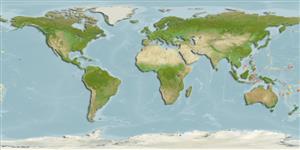
Western Pacific: Taiwan, Indonesia and Papua New Guinea.
ขนาด / น้ำหนัก / อายุ
วัยเจริญพันธุ์: Lm ? range ? - ? cm
Max length : 77.5 cm TL เพศผู้/กระเทย; (Ref. 116740); 93.0 cm TL (female)
คำอธิบายสั้นๆ
เครื่องมือที่ใช้ในการแยกชนิดสัตว์,สิ่งมีชีวิตออกจากกัน | สัณฐานวิทยา | ความยาวต่างๆ
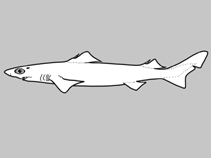
This medium sized (<1 m maximum total length) species is distinguished by the following
set of characters: body relatively slender and head moderately long (20.5-25.1% TL); snout relatively short (horizontal preorbital length 6.4-8.4% TL) and is rounded in dorsal view; the first dorsal is extremely long based (base length 20.8-23.3% TL, soft fin length 16.9-20.2% TL) and relatively high (height 5.7-7.2% TL), the inner margin relatively short (5.3-6.8% TL, 2.6-3.2 in soft fin length); second dorsal fin is much smaller in area to first, similar in height to first dorsal fin (height 1.0-1.3 in first dorsal-fin height); pectoral fins large (anterior margin length 11.0-13.0% TL), free rear tip elongate in larger individuals (2.2-4.0% TL); lateral trunk denticles of larger individuals are sessile (not raised on pedicels), block-like, not elevated; upper teeth of larger individuals with erect to slightly oblique cusps; lower teeth of all sized specimens are much larger than upper teeth, strongly oblique, blade-like; total vertebral centra 112-122; teeth 38-43/29-31 (Ref. 116740).
Body shape (shape guide): elongated; Cross section: angular.
Size of specimens at postnatal stage 40.8-90.5 cm TL; immature make 63.7 cm TL; mature or adult males 71.9-77.6 cm TL; a pregnant female 89.0 cm TL with a 34.6 cm TL late-term embryo. Recorded: females up to 93.0 cm TL; a pregnant female 87.3 cm TL with a single 4.5 cm TL early-term embryo; adult males between 67.9-77.5 mm TL, while a 65.7 cm TL male was immature (73.7 cm TL in Compagno et al., 2005, Ref. 58085) (Ref. 116740).
วงจรชีวิตและพฤติกรรมการผสมพันธุ์
วัยเจริญพันธุ์ | การสืบพันธุ์ | การวางไข่ | เซลสืบพันธ์ของเพศเมีย(ไข่) | ความดกของไข่ | ตัวอ่อน
White, W.T., D.A. Ebert and G.J.P. Naylor, 2017. Revision of the genus Centrophorus (Squaliformes: Centrophoridae): Part 2 - Description of two new species of Centrophorus and clarification of the status of Centrophorus lusitanicus Barbosa du Bocage & de Brito Capello, 1864. Zootaxa 4344(1):086-114. (Ref. 116740)
สถานะบัญชีแดงของ IUCN (Ref. 130435: Version 2025-2 (Global))
ภัยคุกคามต่อมนุษย์
Harmless
การใช้ของมนุษย์
เครื่องมือ
รายงานพิเศษ
ดาวน์โหลด XML
แหล่งที่มาจากอินเตอร์เน็ต
การประมาณค่าตามแบบจำลอง
ดัชนีความหลากหลายทางวิวัฒนาการ (อ้างอิง
82804): PD
50 = 0.5001 [Uniqueness, from 0.5 = low to 2.0 = high].
Bayesian length-weight: a=0.01122 (0.00514 - 0.02450), b=3.04 (2.87 - 3.21), in cm total length, based on all LWR estimates for this body shape (Ref.
93245).
ระดับชั้นอาหาร (อ้างอิง
69278): 4.3 ±0.3 se; based on size and trophs of closest relatives
ความสามารถในการกลับคืนสู่ปกติ (อ้างอิง
120179): ต่ำมาก, เวลาต่ำสุดที่จะทำให้ประชากรเพิ่มขึ้นเป็น 2 เท่าใช้เวลามากกว่า 14 ปี (Preliminary K or Fecundity.).
ความเสี่ยงต่อการตกปลา (Ref.
59153): High vulnerability (57 of 100).
🛈