Classification / Noms
Noms communs | Synonymes | Catalog of Fishes(Genre, Espèce) | ITIS | CoL | WoRMS | Cloffa
>
Cypriniformes (Carps) >
Cobitidae (Spined loaches)
Etymology: Acantopsis: Greek, akantha = thorn + Greek, ops = similar (Ref. 45335); dinema: Dervied from the from Latin di (meaning two) and nema (meaning for thread), in reference to the usual presence of two pairs of labial barbels in this species.
Environnement : milieu / zone climatique / profondeur / gamme de distribution
Écologie
; eau douce démersal. Tropical
Asia: tributaries of the Mekong River draining the Khorat Plateau and Mekong Delta ecoregions in Thailand, Laos, and Cambodia; and Songkhram River in eastern Thailand to the Prek Thnot River south of Phnom Penh, Cambodia.
Taille / Poids / Âge
Maturité: Lm ? range ? - ? cm
Max length : 11.7 cm SL mâle / non sexé; (Ref. 116755)
Description synthétique
Clés d'identification | Morphologie | Morphométrie
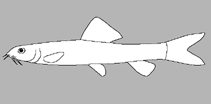
Rayons mous dorsaux (Total) : 10 - 11; Vertèbres: 41 - 42. Acantopsis dinema is distinguished from all congeners by the combination of the following characters: absence of large spots on side of head; many black specks beneath midlateral row of black spots from head to caudal fin; 2 pairs of labial barbels; absence of distinct small black spot on upper margin of caudal-fin base; absence of large black spots on dorsal or caudal fins; dorsal fin usually with 10½ branched rays and pectoral fin with 10 rays; 8-17 dark saddles along dorsal midline; 6-12 black spots along side of body; 41-42 total vertebrae; and body depth 12.0-14.5% SL, body width 8.0-10.3% SL, caudal-peduncle length 12.1-14.3% SL (Ref. 116755).
Body shape (shape guide): elongated.
Cycle de vie et comportement reproducteur
Maturité | Reproduction | Frai | Œufs | Fécondité | Larves
Boyd, D.A., P. Nithirojpakdee, G. Deein, C. Vidthayanon, C. Grudpan, W. Tangjitjaroen, J.M. Pfeiffer, Z.S. Randall, T. Srisombat and L.M. Page, 2017. Revision of the horseface loaches (Cobitidae, Acantopsis), with description of three new species from Southeast Asia. Zootaxa 4341(2):151-192. (Ref. 116755)
Statut dans la liste rouge de l'IUCN (Ref. 130435: Version 2025-2 (Global))
Menace pour l'homme
Harmless
Utilisations par l'homme
Outils
Articles particuliers
Télécharger en XML
Sources Internet
Estimations basées sur des modèles
Indice de diversité phylogénétique (Réf.
82804): PD
50 = 0.5039 [Uniqueness, from 0.5 = low to 2.0 = high].
Bayesian length-weight: a=0.00501 (0.00233 - 0.01079), b=3.08 (2.90 - 3.26), in cm total length, based on LWR estimates for this (Sub)family-body shape (Ref.
93245).
Niveau trophique (Réf.
69278): 3.2 ±0.4 se; based on size and trophs of closest relatives
Résilience (Réf.
120179): Milieu, temps minimum de doublement de population : 1,4 à 4,4 années (Preliminary K or Fecundity.).
Vulnérabilité de la pêche (Ref.
59153): Low vulnerability (10 of 100).
🛈