Classificazione / Nomi
Nomi Comuni | Sinonimi | Catalog of Fishes(Genere, Specie) | ITIS | CoL | WoRMS | Cloffa
>
Characiformes (Characins) >
Characidae (Characins; tetras) > Aphyocharacinae
Etymology: Cyanogaster: Cyano, latinized from the Greek word kúanous (κυανος), meaning blue, and gaster, from the Greek gastêr (γαστηρ), meaning stomach, in referring to the conspicuous iridescent blue col�our in the abdominal region ; noctivaga: Name from Latin noun 'nox' for night and the verb 'vagare' meaning to walk about, when combined as 'noctivaga' or the night wanderer, referring to the presumed nocturnal habits of the species, which was collected exclusively at night; an adjective.
Ambiente: milieu / zona climatica / distribuzione batimetrica / gamma di distribuzione
Ecologia
; acqua dolce benthopelagico; distribuzione batimetrica ? - 2 m (Ref. 93233). Tropical
South America: Brazil and Colombia.
Dimensione / Peso / Età
Maturità: Lm ? range ? - ? cm
Max length : 1.7 cm SL maschio/sesso non determinato; (Ref. 93233)
Breve descrizione
Chiavi di identificazione | Morfologia | Morfometria
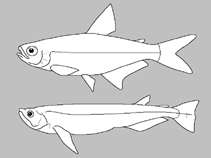
Raggi dorsali molli (totale) : 8 - 9; Raggi anali molli: 19 - 22. This species is distinguished by the following characters: D ii + 8; pelvic-fin rays i + 5; teeth in the inner series of the premaxilla 4; differs from all species of the Stevardiinae by having a single conical tooth in the outer premaxillary series (vs. absent); lacks a pheromone pump usually associated with modified scales on the caudal-fin base; eye large; a line of black chromatophores along the bases of anal and caudal fins; body transparent with abdominal region iridescent blue in life (Ref. 93233).
Cross section: compressed.
Specimens were caught with a seine pulled at approximately 1.5 m depth. The type locality is a beach on a rocky poorly vegetated plateau, where the water was dark black with slow current. Individuals were collected at night, approximately between 20:00 and 24:00, during the dry season (October). Stomach contents of cleared and stained specimens were mainly remnants of insect larvae (Ref. 93233).
Ciclo vitale e comportamento di accoppiamento
Maturità | Riproduzione | Deposizione | Uova | Fecondità | Larve
Mattox, G.M.T., R. Britz, M. Toledo-Piza and M.M.F. Marinho, 2013. Cyanogaster noctivaga, a remarkable new genus and species of miniature fish from the Rio Negro, Amazon basin (Ostariophysi: Characidae). Ichthyol. Explor. Freshwat. 23(4):297-318. (Ref. 93233)
Stato della Lista Rossa IUCN (Ref. 130435: Version 2025-2 (Global))
Minaccia per l'uomo
Harmless
Usi umani
Pesca: di nessun interesse
Strumenti
Rapporti speciali
Scarica XML
Fonti Internet
Stime basate su modelli
Indice di diversità filogenetica (Fonte Biblio.
82804): PD
50 = 0.7500 [Uniqueness, from 0.5 = low to 2.0 = high].
Bayesian length-weight: a=0.01122 (0.00514 - 0.02450), b=3.04 (2.87 - 3.21), in cm total length, based on all LWR estimates for this body shape (Ref.
93245).
Livello trofico (Fonte Biblio.
69278): 3.0 ±0.4 se; based on size and trophs of closest relatives
Vulnerabilità della pesca (Ref.
59153): Low vulnerability (10 of 100).
🛈