Lớp phụ Cá sụn (cá mập và cá đuối) (sharks and rays) >
Orectolobiformes (Carpet sharks) >
Orectolobidae (Carpet or nurse sharks)
Etymology: Orectolobus: orektos (Gr.), stretched out; lobus (L.), from lobos (Gr.), rounded projection or protuberance, referring to long nasal barbels of Squalus barbatus (=O. maculatus) (See ETYFish); ornatus: Latin for adorned or decorated, presumably referring to its color pattern, described as yellowish with broad dark crossbands (the hinder ones encircling the tail), and two dorsal bands with “deeply fretted edges”, each enclosing a pairs of ocelli; name could also refer to the “tentacular fringe” around the head (See ETYFish).
Taxonomic Remarks
To be split. The subspecies O. o. halei is a valid species according to Huveneers 2006 (Ref. 58832).
Môi trường: môi trường / vùng khí hậu / Mức độ sâu / phạm vi phân phối
Sinh thái học
biển cùng sống ở rạn san hô; mức độ sâu 0 - 100 m (Ref. 54689). Tropical
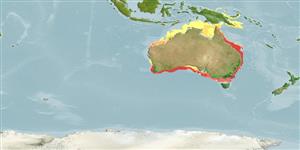
Southwest Pacific: east Australia and southern Papua New Guinea.
Chiều dài lúc trưởng thành đầu tiên / Bộ gần gũi / Khối lượng (Trọng lượng) / Tuổi
Chín muồi sinh dục: Lm ?, range 94 - ? cm
Max length : 290 cm TL con đực/không giới tính; (Ref. 6871)
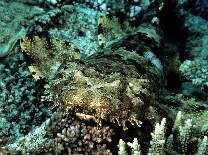
Các tia vây lưng cứng (tổng cộng) : 0; Tia cứng vây hậu môn: 0. Back with light areas between dark saddles marked with dark, light-centered blotches and spots, not reticulated lines (Ref. 13577). Caudal fin with its upper lobe hardly elevated above the body axis, with a strong terminal lobe and subterminal notch but no ventral lobe (Ref. 13577).
Body shape (shape guide): elongated.
A common bottom shark of inshore continental waters, on algal-covered rocky areas and coral reefs (Ref. 247). Nocturnal, resting on the bottom during the day and prowling on its reef habitat at night (Ref. 247). Presumably feeding on bottom invertebrates and fishes but diet unrecorded (Ref. 13577). Ovoviviparous (Ref. 50449). Attacks waders and fishers in tide pools (Ref. 247). Interest to fisheries limited; its skin very tough and attractively patterned and utilized for leather (Ref. 13577).
Ovoviviparous, embryos feed solely on yolk (Ref. 50449).
Compagno, L.J.V., 1984. FAO Species Catalogue. Vol. 4. Sharks of the world. An annotated and illustrated catalogue of shark species known to date. Part 1 - Hexanchiformes to Lamniformes. FAO Fish. Synop. 125(4/1):1-249. Rome, FAO. (Ref. 247)
Tình trạng Sách đỏ IUCN (Ref. 130435: Version 2025-2 (Global))
Mối đe dọa đối với con người
Sử dụng của con người
Các công cụ
Báo cáo đặc biệt
Tải xuống XML
Các nguồn internet
Ước tính dựa trên mô hình
Nhiệt độ ưa thích (Tài liệu tham khảo
123201): 15.3 - 26.7, mean 18.5 °C (based on 386 cells).
Chỉ số đa dạng phát sinh loài (Tài liệu tham khảo
82804): PD
50 = 0.5012 [Uniqueness, from 0.5 = low to 2.0 = high].
Bayesian length-weight: a=0.00389 (0.00180 - 0.00842), b=3.12 (2.94 - 3.30), in cm total length, based on all LWR estimates for this body shape (Ref.
93245).
Mức dinh dưỡng (Tài liệu tham khảo
69278): 4.0 ±0.60 se; based on food items.
Thích nghi nhanh (Tài liệu tham khảo
120179): thấp, thời gian nhân đôi của chủng quần tối thiểu là 4.5 - 14 năm (tmax=20; K=0.19;).
Sự dễ bị tổn thương của nghề đánh cá (Ref.
59153): Very high vulnerability (90 of 100).
🛈
Chất dinh dưỡng (Ref.
124155): Calcium = 7.76 [1.75, 30.74] mg/100g; Iron = 0.33 [0.08, 0.92] mg/100g; Protein = 19.8 [17.6, 21.9] %; Omega3 = 0.0801 [, ] g/100g; Selenium = 46.2 [13.2, 130.7] μg/100g; VitaminA = 23 [8, 62] μg/100g; Zinc = 0.57 [0.28, 1.16] mg/100g (wet weight);