Elasmobranchii (haaien en roggen) (sharks and rays) >
Carcharhiniformes (Ground sharks) >
Scyliorhinidae (Cat sharks) > Scyliorhininae
Etymology: Cephaloscyllium: cephalus, from kephale (Gr.), head, referring to its very broad and depressed head; skylion, Greek for dogfish or small shark (See ETYFish); ventriosum: venter (L.), belly; -osus, Latin suffix connoting fullness, referring to its inflatable stomach (See ETYFish).
More on author: Garman.
Milieu: milieu / Klimaatzone / Diepte / verspreidingsgebied
Ecologie
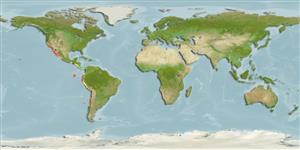
marien demersaal; diepte 5 - 457 m (Ref. 96339), usually 5 - 37 m (Ref. 244). Subtropical; 40°N - 37°S, 126°W - 71°W (Ref. 55293)
Eastern Pacific: central California, USA to the Gulf of California and southern Mexico; central Chile.
Grootte / Gewicht / Leeftijd
Maturiteit: Lm ? range ? - ? cm
Max length : 110 cm TL mannelijk / geslacht onbekend; (Ref. 96339)
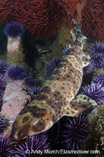
Found on the continental shelves and upper slopes from inshore to deeper waters. Prefers rocky, algal-covered areas of kelp beds. Nocturnal. Feeds on bony fishes, alive and dead, and probably crustaceans. Can inflate its stomach with water or air. Oviparous. Can live in tanks for several years and females can lay eggs in captivity. Occurs in aggregations while resting, sometimes piled one on top of the other. Sometimes caught by sport divers but not used.
Levenscyclus en paargedrag
Maturiteit | Voortplanting | Paaien | Eieren | Fecunditeit | Larven
Oviparous, paired eggs are laid. Embryos feed solely on yolk (Ref. 50449).
Compagno, L.J.V., 1984. FAO Species Catalogue. Vol. 4. Sharks of the world. An annotated and illustrated catalogue of shark species known to date. Part 2 - Carcharhiniformes. FAO Fish. Synop. 125(4/2):251-655. Rome: FAO. (Ref. 244)
Status op de Rode Lijst van het IUCN (Ref. 130435: Version 2025-2 (Global))
Gevaar voor de mens
Harmless
Gebruik door de mens
Visserij: van geen belang; sportvis: ja; Aquarium: Publieke aquaria
Tools
Speciale rapporten
Download XML
Internetbronnen
Schattingen op basis van modellen
Gewenste temperatuur (Ref.
123201): 14.8 - 28.1, mean 22.3 °C (based on 90 cells).
Fylogenetische diversiteitsindex (Ref.
82804): PD
50 = 0.5000 [Uniqueness, from 0.5 = low to 2.0 = high].
Bayesian length-weight: a=0.00269 (0.00140 - 0.00518), b=3.21 (3.04 - 3.38), in cm total length, based on LWR estimates for this (Sub)family-body shape (Ref.
93245).
Trofisch niveau (Ref.
69278): 3.9 ±0.61 se; based on food items.
Weerstandsvermogen (Ref.
120179): laag, minimale populatieverdubbelingstijd 4,5-14 jaar (Fec assumed to be <100).
Kwetsbaarheid van de visserij (Ref.
59153): High to very high vulnerability (66 of 100).
🛈