分類 / 名稱
俗名 | 同種異名 | Catalog of Fishes(屬, 種) | ITIS | CoL | WoRMS | Cloffa
Teleostei >
Clupeiformes (Herrings) >
Dorosomatidae (Gizzard shads and sardinellas)
Etymology: Dorosoma: Greek, doris = lance + Greek, soma = body (Ref. 45335); cepedianum: Named after the French ichthyologist, Lacepede (Ref. 10294).
Eponymy: Bernard Germaine Etienne de la Ville, Comte de Lacépède (also spelled La Cepède) (1756– 1825), was a French naturalist and politician. [...] (Ref. 128868), visit book page.
More on author: Lesueur.
環境: 環境 / 氣候帶 / 深度上下限 / 配送範圍
生態學
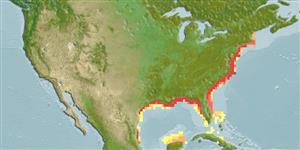
海洋; 淡水; 半鹹淡水 pelagic-neritic; 溯河洄游 (Ref. 138280); 深度上下限 0 - 33 m (Ref. 39020). 亞熱帶的; ? - 32°C (Ref. 12741); 49°N - 21°N, 108°W - 70°W (Ref. 188)
Northwest Atlantic: North America and Gulf of Mexico drainage (southeast South Dakota and central Minnesota, Great Lakes drainage, i.e. in Lake Erie, southern parts of Lakes Huron and Michigan, Lake Ontario basin; not Lake Superior; southernmost New York southward to the Mississippi system and to Gulf southward to Río Pánuco, Mexico.
西北大西洋: 北美洲與墨西哥灣流域 (達科塔南方部東南部與明尼蘇達州中部 , 五大湖流域, 在伊利湖,休倫湖與密西根湖的南部也就是, 安大略湖流域; 不是秀克必李耳湖; 最南的紐約向南至密西西比河流域而且到灣向南至 Rio Panuco ,墨西哥。
初熟時的長度 / 大小 / 重量 / 年齡
成熟度: Lm 36.1 range ? - ? cm
Max length : 57.0 cm FL 雄魚/尚未辨別雌雄; (Ref. 40637); common length : 35.0 cm SL 雄魚/尚未辨別雌雄; (Ref. 7251); 最大體重: 2.0 kg (Ref. 40637); 最大年齡: 10 年 (Ref. 72462)
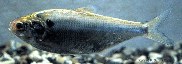
背棘 (總數) : 0; 背的軟條 (總數) : 10 - 15; 臀棘: 0; 臀鰭軟條: 25 - 36; 脊椎骨: 47 - 51. Body moderately deep; belly with 17 to 20 - 10 to 14 scutes. Mouth small; lower jaw short. Last dorsal fin ray long, about equal to distance from snout tip to mid-pectoral fin or beyond; anal fin long. Scales small, somewhat irregular. A dark spot behind gill opening. Gill rakers fine and numerous (Ref. 188). Branchiostegal rays 6 (Ref. 4639). Silvery to brassy, with a bluish back. Stomach thick-walled, gizzard-like (Ref. 7251).
Body shape (shape guide): fusiform / normal; Cross section: compressed.
身體中等縱深的; 腹面有 17個到 20- 10 到 14個鱗甲。 嘴小的; 下頜短。 最後的背鰭鰭條長的, 大約等於從吻尖到在之中的距離-胸鰭或超過; 臀鰭長的。 鱗片小的, 略微不規則的。 在鰓裂後面的一個深色斑點。 鰓耙細且多.(參考文獻 188) 鰓條骨 6.(參考文獻 4639) 銀色到黃銅色的, 具有一個藍色的背面。 腹部厚壁的, 像砂囊一樣的.(參考文獻 7251)
Adults occur mainly in freshwater in large rivers, reservoirs, lakes, swamps, temporary floodwater pools, etc., but adults also found in brackish or saline water of estuaries or bays, preferring quieter open waters. Juveniles are found in great abundance well upstream from brackish water (Ref. 39041). Very young individuals apparently never enter brackish water (Ref. 38947). Larvae are most abundant in surface waters both day and night (Ref. 4639). Adults are herbivorous filter-feeders almost entirely. They breed near the surface in freshwater from late winter (mid-March) through most of the summer (at least to about mid-August). The adhesive eggs sink. Used to some extent as fertilizer and cattle food (Ref. 188).
主要出現在在大河,水庫,湖,沼澤,暫時的洪水水池,等等中的淡水,但是成魚也發現於半鹹淡水或河口或海灣的鹹度水了,偏愛比較安靜的開放水域。 稚魚被發現於大的豐度從半淡鹹水成功地向上游.(參考文獻 39041) 非常年幼的魚個體顯然地從不進入半淡鹹水。 (參考文獻 38947) 仔魚是最豐富在水表面不論白天或夜晚。 (參考文獻 4639) 幾乎完全地的一個食草的濾食動物。 在淡水中接近水面繁殖從冬季末 (三月中) 經過大部分的夏天 (至少到八月中旬左右). 聚集在一起的卵下沉。 使用範圍如肥料與牛食物了。 (參考文獻 188)
Temperature range for spawning: 10°C-28.9°C (Ref. 39042), usually most active above 18°C (Ref. 862, 3742).西北大西洋: 北美洲與墨西哥灣流域 (達科塔南方部東南部與明尼蘇達州中部 , 五大湖流域, 在伊利湖,休倫湖與密西根湖的南部也就是, 安大略湖流域; 不是秀克必李耳湖; 最南的紐約向南至密西西比河流域而且到灣向南至 Rio Panuco ,墨西哥。
Whitehead, P.J.P., 1985. FAO Species Catalogue. Vol. 7. Clupeoid fishes of the world (suborder Clupeoidei). An annotated and illustrated catalogue of the herrings, sardines, pilchards, sprats, shads, anchovies and wolf-herrings. FAO Fish. Synop. 125(7/1):1-303. Rome: FAO. (Ref. 188)
IUCN 瀕危狀態 (Ref. 130435: Version 2025-2 (Global))
無危 (LC) ; Date assessed: 09 July 2018
人類使用
漁業: 低經濟; 游釣魚種: 是的; 誘餌: usually
工具
特別的報告
下載 XML
網路資源
基於模型的估計
首選溫度 (參考文獻
123201): 12.8 - 26.8, mean 24 °C (based on 244 cells).
系統發育多樣性指數 (參考文獻
82804): PD
50 = 0.5312 [Uniqueness, from 0.5 = low to 2.0 = high].
Bayesian length-weight: a=0.00871 (0.00765 - 0.00991), b=3.06 (3.03 - 3.09), in cm total length, based on LWR estimates for this species (Ref.
93245).
營養階層 (參考文獻
69278): 2.4 ±0.21 se; based on food items.
Generation time: 6.1 ( na - na) years. Estimated as median ln(3)/K based on 2
growth studies.
回復力 (參考文獻
120179): 中等的, 族群倍增時間最少 1.4 - 4.4年 (tm=2; tmax=6).
釣魚的脆弱性 (Ref.
59153): Low to moderate vulnerability (30 of 100).
🛈
氣候脆弱性 (Ref.
125649): Moderate to high vulnerability (49 of 100).
🛈
營養素 (Ref.
124155): Calcium = 91.8 [52.8, 153.9] mg/100g; Iron = 1.56 [0.89, 2.61] mg/100g; Protein = 19.8 [18.6, 20.8] %; Omega3 = 0.498 [0.293, 0.826] g/100g; Selenium = 22.4 [11.4, 43.7] μg/100g; VitaminA = 6.48 [2.54, 17.22] μg/100g; Zinc = 1.11 [0.75, 1.57] mg/100g (wet weight);