Myxine glutinosa, Atlantic hagfish

You can sponsor this page

Myxine glutinosa Linnaeus, 1758

Atlantic hagfish
เพิ่มการสังเกตของคุณใน Fish Watcher
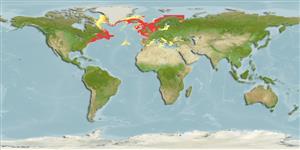
Native range
This map was computer-generated and has not yet been reviewed.
Myxine glutinosa   AquaMaps   Data sources: GBIF OBIS
อัพโหลดของคุณ ภาพถ่าย และ วิดีโอ
รูปภาพหลายรูป | วิดีโอ | Google image
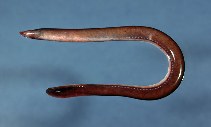
Image of Myxine glutinosa (Atlantic hagfish)
Myxine glutinosa
ภาพโดย Flescher, D.

การจำแนกประเภท / ชื่อ ชื่อสามัญ | ชื่อพ้อง | Catalog of Fishes(สกุล, ชนิด) | ITIS | CoL | WoRMS | Cloffa

Class Myxini (เป็นกลุ่มปลาที่ไม่มีขากรรไกร) (ปลาแฮกฟิช) (hagfishes) > Myxiniformes (Hagfishes) > Myxinidae (Hagfishes) > Myxininae
Etymology: Myxine: Ancient Greek word for a slimy fish: myxa, slime; -inus, one who, referring to copious amounts of slime produced by M. glutinosa (See ETYFish)glutinosa: Latin for viscous or sticky, referring to its seeming ability to turn water into slime (See ETYFish).
More on author: Linnaeus.

สิ่งแวดล้อม : สิ่งแวดล้อม / เขตภูมิอากาศ / ระดับความลึก / ระยะการกระจายสินค้า นิเวศวิทยา

เกี่ยวกับทะเล,น้ำเค็ม สัตว์หน้าดินในเขตน้ำลึก; ไม่มีการอพยพย้ายถิ่น; ระดับความลึก 20 - 1200 m (Ref. 117245), usually 27 - 460 m (Ref. 119696). Boreal; 2°C - 13°C (Ref. 119696); 72°N - 24°N, 89°W - 41°E

การแพร่กระจาย อาณาเขต | พื้นที่จำแนกตาม FAO | ระบบนิเวศหลายระบบ | การปรากฏขึ้น,การเกิดขึ้น,พบ | ตำแหน่งบนแผนที่ | การแนะนำ | Faunafri

North Atlantic: Murmansk to the Mediterranean Sea; Greenland to USA. Absent in eastern Mediterranean and Black Sea. Only hagfish in the Northeast Atlantic.

ความยาวเมื่อครบกำหนดครั้งแรก / ขนาด / น้ำหนัก / อายุ

วัยเจริญพันธุ์: Lm ?, range 25 - ? cm
Max length : 95.0 cm TL เพศผู้/กระเทย; (Ref. 119696); common length : 30.0 cm TL เพศผู้/กระเทย; (Ref. 35388); common length :40 cm TL (female)

คำอธิบายสั้นๆ เครื่องมือที่ใช้ในการแยกชนิดสัตว์,สิ่งมีชีวิตออกจากกัน | สัณฐานวิทยา | ความยาวต่างๆ

Jawless mouth, single nasal aperture, only a single pair of external gill openings, no operculum or covering fold of skin. Grayish or reddish brown above, either plain. Variations in color correspond to the color of the sea bottom.
Body shape (shape guide): eel-like.

ชีววิทยา     ภาคผนวก (เช่น epibenthic)

Benthic with reported depths to 782 off Greenland; 960 m in Northwestern Atlantic; and 1,100 m off Norway (Ref. 119696). Found on muddy bottoms where they hide in the mud. Slime is used for defense. Feeds chiefly on dead and dying fish of varying species by boring into the body and consuming viscera and musculature. Chiefly nocturnal. Its eggs are few in number about 19-30 and large (20-25 mm), the horny shell has a cluster of anchor-tipped filaments at each end.

วงจรชีวิตและพฤติกรรมการผสมพันธุ์ วัยเจริญพันธุ์ | การสืบพันธุ์ | การวางไข่ | เซลสืบพันธ์ของเพศเมีย(ไข่) | ความดกของไข่ | ตัวอ่อน

Copulatory organ absent. The gonads of hagfishes are situated in the peritoneal cavity. The ovary is found in the anterior portion of the gonad, and the testis is found in the posterior part. The animal becomes female if the cranial part of the gonad develops or male if the caudal part undergoes differentiation. If none develops, then the animal becomes sterile. If both anterior and posterior parts develop, then the animal becomes a functional hermaphrodite. However, hermaphroditism being characterised as functional needs to be validated by more reproduction studies (Ref. 51361 ). Probably breed throughout the year in deep water (Ref. 35388).

อ้างอิงหลัก อัพโหลดข้อมูลอ้างอิงของคุณ | อ้างอิง | ผู้ประสานงาน | ผู้ร่วมมือ

Fernholm, B., 1998. Hagfish systematics. p. 33-44. In J.M. Jørgensen, J.P. Lomholt, R.E. Weber and H. Malte (eds.) The biology of hagfishes. Chapman & Hall, London. 578 p. (Ref. 31276)

สถานะบัญชีแดงของ IUCN (Ref. 130435: Version 2025-2 (Global))

  Least Concern (LC) ; Date assessed: 12 November 2009

CITES

Not Evaluated

CMS (Ref. 116361)

Not Evaluated

ภัยคุกคามต่อมนุษย์

  Harmless


การใช้ของมนุษย์

การประมง: ไม่มีผลประโยชน์

ข้อมูลเพิ่มเติม

นิเวศวิทยาเขตร้อน
รายการอาหาร (เหยื่อ)
องค์ประอบของอาหาร
การบริโภคอาหาร
การจัดสรรอาหาร
ผู้ล่า
นิเวศวิทยา
นิเวศวิทยา
พลวัตของประชากร
พารามิเตอร์การเจริญเติบโต
อายุสูงสุด / ขนาด
ความยาว-น้ำหนักสัมพันธ์
ความยาว-ความยาวสัมพันธ์
ความยาว-ความถี่
การแปลงมวล
การทดแทนที่
อุดมสมบรูณ์
วงจรชีวิต
การสืบพันธุ์
วัยเจริญพันธุ์
ความสมบูรณ์พันธุ์/เหงือกที่เกี่ยวข้อง
ความดกของไข่
การวางไข่
การรวมตัวของสปอน
เซลสืบพันธ์ของเพศเมีย(ไข่)
การพัฒนาไข่
ตัวอ่อน
พลวัตของสัตว์น้ำวัยอ่อน
กายวิภาคศาสตร์
พื้นที่เหงือก
สมอง
หินโสต
สรีรวิทยา
องค์ประกอบของร่างกาย
สารอาหาร
การใช้ออกซิเจน
ประเภทการว่ายน้ำ
ระดับความเร็วในการว่ายน้ำ
เม็ดสีที่มองเห็นได้
เสียงปลา
โรคและปรสิต
ความเป็นพิษ (LC50s)
พันธุศาสตร์
จีโนม
พันธุศาสตร์
ความไม่สมดุลทางเชื้อชาติ
อัตราพันธุกรรม
ความหลากหลายทางพันธุกรรม
เกี่ยวข้องกับมนุษย์
ระบบการเพาะเลี้ยงสัตว์น้ำ
ประวัติการเพาะเลี้ยงสัตว์น้ำ
สายพันธุ์
กรณีซิเกวเทอรา
แสตมป์ เหรียญ อื่นๆ
การเข้าถึง
ผู้ร่วมมือ
อ้างอิง
อ้างอิง

เครื่องมือ

รายงานพิเศษ

ดาวน์โหลด XML

แหล่งที่มาจากอินเตอร์เน็ต

การประมาณค่าตามแบบจำลอง

อุณหภูมิที่ต้องการ (อ้างอิง 123201): 1 - 10.2, mean 5.3 °C (based on 550 cells).
ดัชนีความหลากหลายทางวิวัฒนาการ (อ้างอิง 82804):  PD50 = 0.5000   [Uniqueness, from 0.5 = low to 2.0 = high].
Bayesian length-weight: a=0.00115 (0.00045 - 0.00294), b=3.03 (2.81 - 3.25), in cm total length, based on LWR estimates for this (Sub)family-body shape (Ref. 93245).
ระดับชั้นอาหาร (อ้างอิง 69278):  4.5   ±0.0 se; based on diet studies.
ความสามารถในการกลับคืนสู่ปกติ (อ้างอิง 120179):  ต่ำ, เวลาต่ำสุดที่จะทำให้ประชากรเพิ่มขึ้นเป็น 2 เท่าใช้เวลา 4.5 - 14 ปี (Fec= 20-30).
Prior r = 0.10, 95% CL = 0.07 - 0.15, Based on 1 full stock assessment.
ความเสี่ยงต่อการตกปลา (Ref. 59153):  High vulnerability (58 of 100). 🛈
ความเสี่ยงต่อสภาพภูมิอากาศ (Ref. 125649):  Moderate vulnerability (38 of 100). 🛈
สารอาหาร (Ref. 124155):  Calcium = 7.79 [2.08, 25.45] mg/100g; Iron = 0.278 [0.095, 0.782] mg/100g; Protein = 2.26 [0.00, 6.14] %; Omega3 = 0.301 [0.116, 0.790] g/100g; Selenium = 18.8 [5.5, 64.6] μg/100g; VitaminA = 11 [2, 52] μg/100g; Zinc = 0.281 [0.133, 0.569] mg/100g (wet weight);