>
Anabantiformes (Gouramies, snakeheads) >
Osphronemidae (Gouramies) > Osphroneminae
Etymology: Osphronemus: Greek, osphra = smell + Greek, nema = filament; because of the olfactory organs (Ref. 45335).
More on author: Roberts.
ສະພາບແວດລ້ອມ: ສະພາບແວດລ້ອມ / ເຂດດິນຟ້າອາກາດ / ລະດັບຄວາມເລິກ / ຂອບເຂດການແຈກຢາຍ
ນິເວດວິທະຍາ
; ນ້ຳຈືດ ກ່ຽວກັບ (ຢູ່) ໄກ້ໜ້ານ້ຳໃນທະເລເປີດ; ກຸ່ມຫຼືຊະນິດປາທີ່ມີການເຄື່ອນຍ້າຍພາຍໃນນ້ຳຈືດ (Ref. 138296). Tropical
Asia: known only from the Mekong basin.
ຂະໜາດ / ນ້ຳໜັກ / ອາຍຸ
ການຈະເລີນເຕັມໄວ: Lm ? range ? - ? cm
Max length : 60.0 cm SL ຕົວຜູ້/ບໍ່ມີເພດ; (Ref. 30857)
ຄີ (ໜາມ)ແຂງຢູ່ຫຼັງປາ (ທັງໝົດ) : 14 - 16; ຄີຫຼັງຂອງປາ (ຄີອ່ອນ) (ທັງໝົດ) : 10 - 11; ຄີ(ໜາມ) ແຂງຢູ່ຄີກົ້ນປາ
ກຸ່ມປາກະດູກແຂງ
ຄວາມຖີ່ຂອງກຸ່ມຖ່າຍທອດພັນ
ປາທີ່ມີການເຄື່ອນຍ້າຍຈາກທະເລໄປຫານ້ຳຈືດ ແລະນ້ຳຈືດຫາທະເລ
ປາທີ່ມີການເຄື່ອນຍ້າຍຈາກທະເລແລະໄປໄຂ່ຢູ່ນ້ຳຈືດ
ຄີກົ້ນຂອງປາ
ສັດທີ່ມີກະດູກສັນຫັຼງ
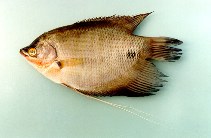
ການຖ່າຍທອດທາງກຳມະພັນຈາກພໍ່ແມ່ຫາລູກ: 11 - 13; ຄີກົ້ນຂອງປາ: 17 - 19. Differs from the other three known species of Osphronemus in having oral teeth increasingly enlarged and externalized in large adults, a condition apparently unique within anabantoid fishes. In large specimens examined, over 40 cm SL, all of the jaw teeth are enlarged, especially those in the outermost rows, which lie on the external surface of the jaws entirely outside the mouth when it is shut. Coloration of juveniles and adults also is diagnostic. Small juveniles have 6 or 7 vertical bars and a supra-anal dark oval spot, none of which are retained by adults and subadults. Juveniles over about 10 cm have a reddish orangish stripe on the lower part of the head and breast, a feature not observed in any other species. All adults have extensive dark (almost black) areas ventrally and pale areas dorsally. Several large specimens (especially from Stung Treng market, Cambodia) with large and irregular red blotches that superficially at least look very muck like bodied bruises.
Body shape (shape guide): short and / or deep.
Obligate air-breathing (Ref. 126274); Occurs in pools of large rivers and in flooded forests during the rainy season. Feeds mainly on plant matter including fruits, leaves, and flowers, with some insects and crustaceans. Known to reproduce in non-flowing waters near the river shore during lowest water levels (Ref. 12693). Undertakes lateral migrations from the Mekong mainstream into floodplain areas during the flood season and returns to the Mekong River or other permanent water bodies during the dry season (Ref. 37770). These movements are triggered when water levels change (Ref. 37770). Marketed fresh (Ref. 12693).
ວົງຈອນຊີວິດ ແລະພຶດຕິກໍາການຫາຄູ່
ການຈະເລີນເຕັມໄວ | ການສືບພັນ | ການວາງໄຂ່ | ໄຂ່ | ຄວາມດົກຂອງໄຂ່ປາ | ຕົວອ່ອນ
Builds a small nest, made of leaves and roots of a plant named "gohk kai" in Takam, just below the Lee Pee Waterfalls in southern Laos. Eggs and young are guarded by one parent as observed in the Mekong basin at Stung Treng.
Rainboth, W.J., 1996. Fishes of the Cambodian Mekong. FAO species identification field guide for fishery purposes. FAO, Rome, 265 p. (Ref. 12693)
ສະຖານະພາບບັນຊີແດງຂອງ IUCN (Ref. 130435: Version 2025-2 (Global))
ໄພຂົ່ມຂູ່ຕໍ່ມະນຸດ
Harmless
ການນໍາໃຊ້ຂອງມະນຸດ
ການປະມົງ: ເປັນສີນຄ້າ
ເຄື່ອງມື
ບົດລາຍງານພິເສດ
ດາວໂຫລດ XML
ແຫຼ່ງອີນເຕີເນັດ
ການຄາດຄະເນໂດຍອີງໃສ່ແບບຈໍາລອງ
ດັດຊະນີຄວາມຫຼາກຫຼາຍທາງຊີວະພາບ (ເອກະສານອ້າງອີງ
82804): PD
50 = 0.5625 [Uniqueness, from 0.5 = low to 2.0 = high].
Bayesian length-weight: a=0.01698 (0.00686 - 0.04207), b=3.01 (2.79 - 3.23), in cm total length, based on LWR estimates for this (Sub)family-body shape (Ref.
93245).
ຊັ້ນເຂດຮ້ອນ (ເອກະສານອ້າງອີງ
69278): 2.7 ±0.29 se; based on food items.
ຄວາມຢືດຢຸ່ນ (ເອກະສານອ້າງອີງ
120179): ຂະໜາດກາງ, ປະຊາກອນຕຳ່ສຸດທີ່ໃຊ້ເວລາສອງເທົ່າ 1.4 - 4.4 ປີ (Fec = 1,240).
ຄວາມສ່ຽງຕໍ່ການຫາປາ (Ref.
59153): Moderate to high vulnerability (49 of 100).
🛈