Môi trường: môi trường / vùng khí hậu / Mức độ sâu / phạm vi phân phối
Sinh thái học
; nước ngọt; thuộc về nước lợ sống nổi và đáy; pH range: ? - 7.5; dH range: ? - 16; không di cư (Ref. 126106); mức độ sâu 0 - ? m (Ref. 55170). Tropical; 18°C - 24°C (Ref. 2060); 31°N - 3°N, 93°W - 49°W (Ref. 55170)
North, Central and South America: eastern coasts of Florida (Indian River to Key West) in USA and Bahamas to Cuba, Jamaica, Cayman Island, Brazil, French Guiana, the Netherlands Antilles, Venezuela, Belize, Mexico, Puerto Rico. Throughout Caribbean (Ref. 26938).
Chiều dài lúc trưởng thành đầu tiên / Bộ gần gũi / Khối lượng (Trọng lượng) / Tuổi
Chín muồi sinh dục: Lm 17.0 range ? - ? cm
Max length : 7.5 cm TL con đực/không giới tính; (Ref. 27139)
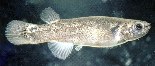
Dark spot surrounded by yellow ring on side of caudal peduncle, just ahead of upper part of caudal fin base (Ref. 26938).
Body shape (shape guide): elongated.
Facultative air-breathing (Ref. 126274); Adults inhabit shallow, mud-bottomed ditches, bays, salt marshes and other brackish-water environments; also crab burrows (Ref. 5723), moist leaf litter, decaying mangrove logs (Ref. 93034). Can withstand heavy pollution of fresh or salty waters and shares its biotope with Poecilia vivipara which is much more abundant (Ref. 35237). Usually found in water with low oxygen content (Ref. 7251). Either male or hermaphroditic, females don't seem to exist. Only about 5% of a population are born as males; after 3-4 years about 60% of the (self-fertilizing) hermaphrodites transform into secondary males by losing female structure and function. The proportion of males depends on the environmental temperature. Below 20°C, majority are males, above 25°C all are hermaphrodites (Ref. 35237). It is the only known naturally occurring, self-fertilizing vertebrate (Ref. 13056, 35237). Not a seasonal killifish. Is very difficult to maintain in aquarium (Ref. 27139).
Eggs are sometimes fertilized internally by accident via close apposition of gonopores in otherwise oviparous fishes (Ref. 7471). Regarded as a self-fertilizing hermaphrodite (Ref. 6028, 245, 35237). Eggs are 1.6 mm in diameter. Sexes can be distinguished after 8 weeks (Ref. 35237). Also Ref. 103751.
Costa, W.J.E.M., 2003. Rivulidae (South American Annual Fishes). p. 526-548. In R.E. Reis, S.O. Kullander and C.J. Ferraris, Jr. (eds.) Checklist of the Freshwater Fishes of South and Central America. Porto Alegre: EDIPUCRS, Brasil. (Ref. 36579)
Tình trạng Sách đỏ IUCN (Ref. 130435: Version 2025-2 (Global))
Mối đe dọa đối với con người
Harmless
Sử dụng của con người
Các nghề cá: tính thương mại; Bể nuôi cá: Tính thương mại; mồi:
Các công cụ
Báo cáo đặc biệt
Tải xuống XML
Các nguồn internet
Ước tính dựa trên mô hình
Chỉ số đa dạng phát sinh loài (Tài liệu tham khảo
82804): PD
50 = 0.5039 [Uniqueness, from 0.5 = low to 2.0 = high].
Bayesian length-weight: a=0.00389 (0.00180 - 0.00842), b=3.12 (2.94 - 3.30), in cm total length, based on all LWR estimates for this body shape (Ref.
93245).
Mức dinh dưỡng (Tài liệu tham khảo
69278): 3.2 ±0.48 se; based on food items.
Thích nghi nhanh (Tài liệu tham khảo
120179): Chiêù cao, thời gian nhân đôi của chủng quần tối thiểu là dưới 15 tháng (tm=0.5).
Sự dễ bị tổn thương của nghề đánh cá (Ref.
59153): Low vulnerability (10 of 100).
🛈