ກຸ່ມປາກະດູກອ່ອນ (ເຊັ່ນ: ປາສະຫລາມ, ປາຜາໄລ) (sharks and rays) >
Myliobatiformes (Stingrays) >
Myliobatidae (Eagle and manta rays)
Etymology: Myliobatis: Greek, mylo = mill + Greek, + Greek, batis,-idos = a ray (Raja sp.) (Ref. 45335).
More on author: Linnaeus.
ສະພາບແວດລ້ອມ: ສະພາບແວດລ້ອມ / ເຂດດິນຟ້າອາກາດ / ລະດັບຄວາມເລິກ / ຂອບເຂດການແຈກຢາຍ
ນິເວດວິທະຍາ
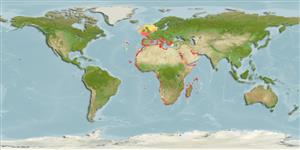
ສັດທະເລ; ນ້ຳກ່ອຍ ກ່ຽວກັບ (ຢູ່)ເທິງຊັ້ນພື້ນດິນໃນທະເລເປີດ; ລະດັບຄວາມເລິກ 1 - 300 m (Ref. 4440). Subtropical; 60°N - 36°S, 32°W - 58°E
Eastern Atlantic: Madeira, Morocco and the Canary Islands north to the western coasts of Ireland and British Isles and the southwestern North Sea, south to Natal, South Africa (western Indian Ocean); throughout the Mediterranean.
ຄວາມຍາວໃນການເຕີບໂຕເຕັມຄັ້ງທໍາອິດ / ຂະໜາດ / ນ້ຳໜັກ / ອາຍຸ
ການຈະເລີນເຕັມໄວ: Lm ?, range 60 - ? cm
Max length : 183 cm WD ຕົວຜູ້/ບໍ່ມີເພດ; (Ref. 4440); ນ້ຳໜັກສູງສຸດທີ່ເຄຍຈັດພີມມາ: 14.5 kg (Ref. 40637)
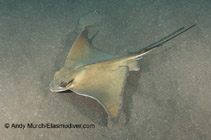
A plain eagleray with a short, rounded snout; disc with broadly angular corners, and upper or lower jaw usually with 7 rows of plate-like teeth (Ref. 5578). Brown or blackish dorsally, white ventrally (Ref. 5578). No caudal fin (Ref. 5578).
Body shape (shape guide): other.
Found in shallow lagoons (Ref. 3965), bays and estuaries; also offshore down to at least 95 m (Ref. 5578). Often found in groups (Ref. 5578). Feeds on benthic crustaceans, mollusks and fish. Ovoviviparous (Ref. 50449). Gestation period of 6-8 months, the females give birth to 3-7 young (Ref. 35388). Caught by shore and ski-boat anglers, usually released after capture (Ref. 5578). Flesh is highly esteemed (Ref. 3965).
Exhibit ovoviparity (aplacental viviparity), with embryos feeding initially on yolk, then receiving additional nourishment from the mother by indirect absorption of uterine fluid enriched with mucus, fat or protein through specialised structures (Ref. 50449).
McEachran, J.D. and B. Séret, 1990. Myliobatididae. p. 67-70. In J.C. Quero, J.C. Hureau, C. Karrer, A. Post and L. Saldanha (eds.) Check-list of the fishes of the eastern tropical Atlantic (CLOFETA). JNICT, Lisbon; SEI, Paris; and UNESCO, Paris. Vol. 1. (Ref. 4440)
ສະຖານະພາບບັນຊີແດງຂອງ IUCN (Ref. 130435: Version 2025-2 (Global))
ໄພຂົ່ມຂູ່ຕໍ່ມະນຸດ
Harmless
ການນໍາໃຊ້ຂອງມະນຸດ
ການປະມົງ: ທີ່ເປັນການຄ້າໜ້ອຍ; ຊະນິດປາທີ່ຖືກນຳໃຊ້ເຂົ້າໃນການຫາເພື່ອເປັນເກມກິລາ: ແມ່ນ
ເຄື່ອງມື
ບົດລາຍງານພິເສດ
ດາວໂຫລດ XML
ແຫຼ່ງອີນເຕີເນັດ
ການຄາດຄະເນໂດຍອີງໃສ່ແບບຈໍາລອງ
ອຸນຫະພູມທີ່ຕ້ອງການ (ເອກະສານອ້າງອີງ
123201): 11.7 - 19.8, mean 15.2 °C (based on 318 cells).
ດັດຊະນີຄວາມຫຼາກຫຼາຍທາງຊີວະພາບ (ເອກະສານອ້າງອີງ
82804): PD
50 = 0.5002 [Uniqueness, from 0.5 = low to 2.0 = high].
Bayesian length-weight: a=0.00389 (0.00124 - 0.01219), b=3.08 (2.83 - 3.33), in cm total length, based on LWR estimates for this (Sub)family-body shape (Ref.
93245).
ຊັ້ນເຂດຮ້ອນ (ເອກະສານອ້າງອີງ
69278): 3.6 ±0.54 se; based on food items.
ຄວາມຢືດຢຸ່ນ (ເອກະສານອ້າງອີງ
120179): ຕຳ່ຫຼາຍ, ປະຊາກອນຕຳ່ສຸດທີ່ໃຊ້ເວລາສອງເທົ່າຫຼາຍກວ່າ 14 ປີ (Fec=3).
ຄວາມສ່ຽງຕໍ່ການຫາປາ (Ref.
59153): Very high vulnerability (83 of 100).
🛈
ຄວາມສ່ຽງດ້ານສະພາບອາກາດ (Ref.
125649): Moderate to high vulnerability (47 of 100).
🛈
ທາດອາຫານ (Ref.
124155): Calcium = 6.54 [0.80, 118.48] mg/100g; Iron = 0.508 [0.046, 6.020] mg/100g; Protein = 20.4 [15.1, 25.6] %; Omega3 = 0.205 [0.068, 0.558] g/100g; Selenium = 36.1 [6.7, 193.9] μg/100g; VitaminA = 3.95 [0.36, 41.63] μg/100g; Zinc = 0.492 [0.030, 5.489] mg/100g (wet weight);