Environnement : milieu / zone climatique / profondeur / gamme de distribution
Écologie
marin; eau douce; saumâtre démersal; amphidrome (Ref. 138280). Tropical; 24°N - 13°S
Asia and Oceania: Indonesia, Philippines, New Guinea, Solomon Islands, Taiwan, China and some Japanese islands.
Taille / Poids / Âge
Maturité: Lm ? range ? - ? cm
Max length : 25.0 cm SL mâle / non sexé; (Ref. 2847)
Description synthétique
Clés d'identification | Morphologie | Morphométrie
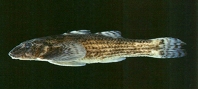
Épines dorsales (Total) : 8; Rayons mous dorsaux (Total) : 8 - 9; Épines anales: 1; Rayons mous anaux: 8 - 9. Characterized by having enlarged, thickened and wide pectoral fins; widely spaced broad fleshy pelvic fin; head and snout flattened, small dorsolaterally oriented eyes; small ventrally placed mouth; accessory lateral line canals dorsal and ventral to the lateral line on the body, including caudal fin base; caudal fin large (Ref. 92840).
Body shape (shape guide): elongated.
Adults inhabit relatively steep gradient coastal streams in hilly or mountainous terrain. They feed on algae and diatoms; effectively clings on rocks and boulders with its broadened pelvic and pectoral fins and flattened head and snout (Ref. 92840).
Cycle de vie et comportement reproducteur
Maturité | Reproduction | Frai | Œufs | Fécondité | Larves
Allen, G.R., 1991. Field guide to the freshwater fishes of New Guinea. Publication, no. 9. 268 p. Christensen Research Institute, Madang, Papua New Guinea. (Ref. 2847)
Statut dans la liste rouge de l'IUCN (Ref. 130435: Version 2025-2 (Global))
Menace pour l'homme
Harmless
Utilisations par l'homme
Pêcheries: intérêt commercial mineur
Outils
Articles particuliers
Télécharger en XML
Sources Internet
Estimations basées sur des modèles
Indice de diversité phylogénétique (Réf.
82804): PD
50 = 0.8750 [Uniqueness, from 0.5 = low to 2.0 = high].
Bayesian length-weight: a=0.00389 (0.00180 - 0.00842), b=3.12 (2.94 - 3.30), in cm total length, based on all LWR estimates for this body shape (Ref.
93245).
Niveau trophique (Réf.
69278): 3.6 ±0.5 se; based on size and trophs of closest relatives
Vulnérabilité de la pêche (Ref.
59153): Low vulnerability (21 of 100).
🛈