>
Blenniiformes (Blennies) >
Tripterygiidae (Triplefin blennies) > Tripterygiinae
Etymology: Bellapiscis: Latin, bellum = war + Latin, piscis = fish.
Eponymy: Dr Lesley Anne Bolton-Ritchie is a New Zealand marine biologist. [...] (Ref. 128868), visit book page.
Milieu: milieu / Klimaatzone / Diepte / verspreidingsgebied
Ecologie
marien demersaal; standvastig; diepte 0 - 5 m (Ref. 13227). Temperate
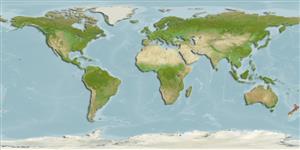
Southwest Pacific: New Zealand.
Lengte bij maturiteit / Grootte / Gewicht / Leeftijd
Maturiteit: Lm 4.3, range 4 - 4.5 cm
Max length : 6.0 cm SL mannelijk / geslacht onbekend; (Ref. 13227); max. gerapporteerde leeftijd: 3.00 Jaren (Ref. 13227)
Korte beschrijving
Determinatiesleutels | Morfologie | Morfometrie
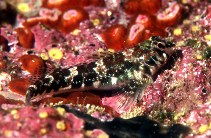
Dorsale stekels (totaal) : 18 - 21; Dorsale zachte stralen (totaal) : 10 - 15; Anale stekels: 2; Anale zachte stralen: 17 - 22. With 17-22 soft anal fin rays, 17-25 lateral line scales, 35-42 +1 total lateral scale rows, and the body with an irregular or without a checker-board pattern, extending to level of belly.
Body shape (shape guide): fusiform / normal; Cross section: oval.
Facultative air-breathing in the genus (Ref. 126274); Adults are found predominantly in tide pools and upper subtidal areas. Are solitary. They feed mainly on amphipods, isopods, polychaetes, and small gastropods. Males may defend small breeding territories during the breeding season (Ref 13227). Eggs are hemispherical and covered with numerous sticky threads that anchor them in the algae on the nesting sites (Ref. 240). Larvae are planktonic which occur primarily in shallow, nearshore waters (Ref. 94114).
Eggs are laid in empty barnacle shells found in rocky areas. The nest is guarded by the male while the eggs are covered with water. Juveniles are found in the intertidal region between August and December (Ref. 13227).
Fricke, R., 1994. Tripterygiid fishes of Australia, New Zealand and the southwest Pacific Ocean (Teleostei). Theses Zool. 24:1-585. (Ref. 13227)
Status op de Rode Lijst van het IUCN (Ref. 130435: Version 2025-2 (Global))
Gevaar voor de mens
Harmless
Gebruik door de mens
Visserij: van geen belang
Tools
Speciale rapporten
Download XML
Internetbronnen
Schattingen op basis van modellen
Gewenste temperatuur (Ref.
123201): 13 - 19.8, mean 16.4 °C (based on 118 cells).
Fylogenetische diversiteitsindex (Ref.
82804): PD
50 = 0.7500 [Uniqueness, from 0.5 = low to 2.0 = high].
Bayesian length-weight: a=0.00692 (0.00361 - 0.01325), b=3.08 (2.91 - 3.25), in cm total length, based on LWR estimates for this species & (Sub)family-body (Ref.
93245).
Trofisch niveau (Ref.
69278): 3.3 ±0.48 se; based on food items.
Weerstandsvermogen (Ref.
120179): Hoog, minimale populatieverdubbelingstijd minder dan 15 maanden (tm=1; tmax=3).
Kwetsbaarheid van de visserij (Ref.
59153): Low vulnerability (10 of 100).
🛈