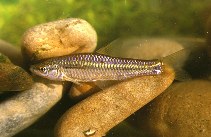
>
Cypriniformes (Carps) >
Gobionidae (Gudgeons)
Etymology: Pseudorasbora: Greek, pseudes = false + Rasbora, an Indian word for a fish, also used in Malay peninsula.
More on authors: Temminck & Schlegel.
ສະພາບແວດລ້ອມ: ສະພາບແວດລ້ອມ / ເຂດດິນຟ້າອາກາດ / ລະດັບຄວາມເລິກ / ຂອບເຂດການແຈກຢາຍ
ນິເວດວິທະຍາ
; ນ້ຳຈືດ; ນ້ຳກ່ອຍ ກ່ຽວກັບ (ຢູ່)ເທິງຊັ້ນພື້ນດິນໃນທະເລເປີດ; pH range: ? - 7.0; dH range: ? - 15. Temperate; 5°C - 22°C (Ref. 2060); 54°N - 22°N, 110°E - 141°E
Asia: Amur to Zhujiang [Pearl River] drainages in Siberia, Korea and China (Ref. 59043). Introduced to various areas in Europe and Asia. Several countries report adverse ecological impact after introduction (Ref. 1739).
ຄວາມຍາວໃນການເຕີບໂຕເຕັມຄັ້ງທໍາອິດ / ຂະໜາດ / ນ້ຳໜັກ / ອາຍຸ
ການຈະເລີນເຕັມໄວ: Lm 3.0 range ? - ? cm
Max length : 12.5 cm TL ຕົວຜູ້/ບໍ່ມີເພດ; (Ref. 88166); common length : 8.0 cm TL ຕົວຜູ້/ບໍ່ມີເພດ; (Ref. 1441); ອາຍຸສູງສຸດທີ່ເຄຍລາຍງານມາ: 5 ປີ (Ref. 56557)
ຄີ (ໜາມ)ແຂງຢູ່ຫຼັງປາ (ທັງໝົດ) : 3; ຄີຫຼັງຂອງປາ (ຄີອ່ອນ) (ທັງໝົດ) : 7; ຄີ(ໜາມ) ແຂງຢູ່ຄີກົ້ນປາ
ກຸ່ມປາກະດູກແຂງ
ຄວາມຖີ່ຂອງກຸ່ມຖ່າຍທອດພັນ
ປາທີ່ມີການເຄື່ອນຍ້າຍຈາກທະເລໄປຫານ້ຳຈືດ ແລະນ້ຳຈືດຫາທະເລ
ປາທີ່ມີການເຄື່ອນຍ້າຍຈາກທະເລແລະໄປໄຂ່ຢູ່ນ້ຳຈືດ
ຄີກົ້ນຂອງປາ
ສັດທີ່ມີກະດູກສັນຫັຼງ
ການຖ່າຍທອດທາງກຳມະພັນຈາກພໍ່ແມ່ຫາລູກ: 3; ຄີກົ້ນຂອງປາ: 6. Mouth superior and transverse; 6 branched anal rays; barbels absent; distal margin of dorsal convex; large adults with sexually dimorphic coloration (Ref. 43281).
Body shape (shape guide): fusiform / normal.
Found in a wide variety of habitats, most abundantly in well vegetated small channels, ponds and small lakes (Ref. 59043). Adults occur in cool running water. Feed on small insects, fish and fish eggs (Ref. 30578), and plant material (Ref. 59043). Usually breed in habitats with still or very slow-flowing water (Ref. 59043). Females spawn 3-4 times in a season (Ref. 59043). Males clear the surface of the spawning site and guard the eggs until they hatch (Ref. 59043). Regarded as pest which competes with the fry of other species due to its high reproductive rate (Ref. 1739).
Nests under stones and the male cleans the cavity with its pearl organs. Eggs adhere to the ceiling of the cavity. The male leaves the nest before the eggs hatch. Females spawn 3-4 times during a season (Ref. 59043).
Kottelat, M. and J. Freyhof, 2007. Handbook of European freshwater fishes. Publications Kottelat, Cornol and Freyhof, Berlin. 646 pp. (Ref. 59043)
ສະຖານະພາບບັນຊີແດງຂອງ IUCN (Ref. 130435: Version 2025-2 (Global))
ໄພຂົ່ມຂູ່ຕໍ່ມະນຸດ
Potential pest
ການນໍາໃຊ້ຂອງມະນຸດ
ການປະມົງ: ທີ່ບໍ່ມີຄວາມສົນໃຈ; ຕູ້ປາ: ເປັນສີນຄ້າ
ເຄື່ອງມື
ບົດລາຍງານພິເສດ
ດາວໂຫລດ XML
ແຫຼ່ງອີນເຕີເນັດ
ການຄາດຄະເນໂດຍອີງໃສ່ແບບຈໍາລອງ
ດັດຊະນີຄວາມຫຼາກຫຼາຍທາງຊີວະພາບ (ເອກະສານອ້າງອີງ
82804): PD
50 = 0.5312 [Uniqueness, from 0.5 = low to 2.0 = high].
Bayesian length-weight: a=0.00776 (0.00666 - 0.00905), b=3.13 (3.09 - 3.17), in cm total length, based on LWR estimates for this species (Ref.
93245).
ຊັ້ນເຂດຮ້ອນ (ເອກະສານອ້າງອີງ
69278): 3.1 ±0.1 se; based on diet studies.
Generation time: 4.5 ( na - na) years. Estimated as median ln(3)/K based on 2
growth studies.
ຄວາມຢືດຢຸ່ນ (ເອກະສານອ້າງອີງ
120179): ຂະໜາດກາງ, ປະຊາກອນຕຳ່ສຸດທີ່ໃຊ້ເວລາສອງເທົ່າ 1.4 - 4.4 ປີ (tm=1; tmax=5; K=0.24; Fec=1,000).
ຄວາມສ່ຽງຕໍ່ການຫາປາ (Ref.
59153): Low to moderate vulnerability (29 of 100).
🛈