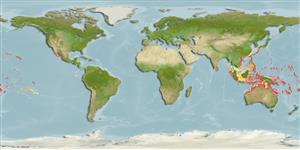
ສະພາບແວດລ້ອມ: ສະພາບແວດລ້ອມ / ເຂດດິນຟ້າອາກາດ / ລະດັບຄວາມເລິກ / ຂອບເຂດການແຈກຢາຍ
ນິເວດວິທະຍາ
ສັດທະເລ ກ່ຽວກັນຫີນ; ບໍ່ມີການເຄື່ອນຍ້າຍ; ລະດັບຄວາມເລິກ 0 - 40 m (Ref. 7247). Tropical; 35°N - 25°S
Western Pacific: widespread, from southern Japan to Australia and Tonga; no records from Hawaii nor French Polynesia. Replaced by Chromis opercularis in the Indian Ocean (Ref. 129596).
ຂະໜາດ / ນ້ຳໜັກ / ອາຍຸ
ການຈະເລີນເຕັມໄວ: Lm ? range ? - ? cm
Max length : 17.0 cm TL ຕົວຜູ້/ບໍ່ມີເພດ; (Ref. 90102)
ຄີ (ໜາມ)ແຂງຢູ່ຫຼັງປາ (ທັງໝົດ) : 13; ຄີຫຼັງຂອງປາ (ຄີອ່ອນ) (ທັງໝົດ) : 10 - 11; ຄີ(ໜາມ) ແຂງຢູ່ຄີກົ້ນປາ
ກຸ່ມປາກະດູກແຂງ
ຄວາມຖີ່ຂອງກຸ່ມຖ່າຍທອດພັນ
ປາທີ່ມີການເຄື່ອນຍ້າຍຈາກທະເລໄປຫານ້ຳຈືດ ແລະນ້ຳຈືດຫາທະເລ
ປາທີ່ມີການເຄື່ອນຍ້າຍຈາກທະເລແລະໄປໄຂ່ຢູ່ນ້ຳຈືດ
ຄີກົ້ນຂອງປາ
ສັດທີ່ມີກະດູກສັນຫັຼງ
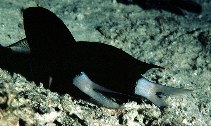
ການຖ່າຍທອດທາງກຳມະພັນຈາກພໍ່ແມ່ຫາລູກ: 2; ຄີກົ້ນຂອງປາ: 10 - 11. This species is distinguished by the following set of characters: D XIII,10-11(mode 11); A II,10-11 (11); pectoral-fin rays 18-20 (19); upper and lower procurrent caudal-fin rays 3; pored lateral-line scales 17-18 (18); gill rakers 6-8 (7) + 19-22 (21) = 26-30 (28); longest dorsal-fin soft ray length 24.6-36.4% (mean 29.4%) of SL; first anal-fin spine length 6.5-8.4% (7.1%) of SL; caudal-fin length 43.9-59.8% (48.6%) of SL; posterior tips of caudal-fin lobes are filamentous; broad black bands along the preopercular and opercular margins, sum width of two bands 15.3-27.9% (23.6%) of head length; distal half of soft-rayed portion of the dorsal fin is transparent in adults; upper or lower caudal-fin base no triangular black blotches; caudal peduncle and fin are tinged with yellow; soft-rayed portions of dorsal and anal fins are yellowish, with spinous portion of dorsal and pelvic fins dark blue in juveniles (Ref. 129596).
Body shape (shape guide): short and / or deep; Cross section: compressed.
Adults are found in steep outer reef slopes and shallow coastal reef flats, sometimes forming large aggregations feeding on zooplankton several meters above the bottom. Juveniles remain close to shelter. Oviparous, distinct pairing during breeding (Ref. 205). Eggs are demersal and adhere to the substrate (Ref. 205). Nests are found in small patches of loose sand under ledges or at the base of slopes (Ref. 9710). Males guard and aerate the eggs (Ref. 205). Diurnal species (Ref. 54980; 113699). Minimum depth reported taken from Ref. 128797.
ວົງຈອນຊີວິດ ແລະພຶດຕິກໍາການຫາຄູ່
ການຈະເລີນເຕັມໄວ | ການສືບພັນ | ການວາງໄຂ່ | ໄຂ່ | ຄວາມດົກຂອງໄຂ່ປາ | ຕົວອ່ອນ
Oviparous, distinct pairing during breeding (Ref. 205). Eggs are demersal and adhere to the substrate (Ref. 205). Males guard and aerate the eggs (Ref. 205).
Allen, G.R., 1991. Damselfishes of the world. Mergus Publishers, Melle, Germany. 271 p. (Ref. 7247)
ສະຖານະພາບບັນຊີແດງຂອງ IUCN (Ref. 130435: Version 2025-2 (Global))
ໄພຂົ່ມຂູ່ຕໍ່ມະນຸດ
Harmless
ການນໍາໃຊ້ຂອງມະນຸດ
ການປະມົງ: ເປັນສີນຄ້າ; ຕູ້ປາ: ເປັນສີນຄ້າ
ເຄື່ອງມື
ບົດລາຍງານພິເສດ
ດາວໂຫລດ XML
ແຫຼ່ງອີນເຕີເນັດ
ການຄາດຄະເນໂດຍອີງໃສ່ແບບຈໍາລອງ
ອຸນຫະພູມທີ່ຕ້ອງການ (ເອກະສານອ້າງອີງ
123201): 24.7 - 28.9, mean 27.7 °C (based on 424 cells).
ດັດຊະນີຄວາມຫຼາກຫຼາຍທາງຊີວະພາບ (ເອກະສານອ້າງອີງ
82804): PD
50 = 0.5000 [Uniqueness, from 0.5 = low to 2.0 = high].
Bayesian length-weight: a=0.01445 (0.00680 - 0.03071), b=2.94 (2.76 - 3.12), in cm total length, based on LWR estimates for this species & Genus-body shape (Ref.
93245).
ຊັ້ນເຂດຮ້ອນ (ເອກະສານອ້າງອີງ
69278): 3.4 ±0.45 se; based on food items.
ຄວາມຢືດຢຸ່ນ (ເອກະສານອ້າງອີງ
120179): ຂະໜາດກາງ, ປະຊາກອນຕຳ່ສຸດທີ່ໃຊ້ເວລາສອງເທົ່າ 1.4 - 4.4 ປີ (Preliminary K or Fecundity.).
ຄວາມສ່ຽງຕໍ່ການຫາປາ (Ref.
59153): Low vulnerability (10 of 100).
🛈
ທາດອາຫານ (Ref.
124155): Calcium = 79.2 [39.4, 122.1] mg/100g; Iron = 0.721 [0.430, 1.172] mg/100g; Protein = 18.3 [17.2, 19.4] %; Omega3 = 0.116 [0.070, 0.190] g/100g; Selenium = 25.6 [13.4, 49.3] μg/100g; VitaminA = 132 [39, 433] μg/100g; Zinc = 1.25 [0.83, 1.78] mg/100g (wet weight);