أشلاق (القروش و الشفانين) (sharks and rays) >
Hexanchiformes (Frill and cow sharks) >
Chlamydoselachidae (Frilled sharks)
Etymology: Chlamydoselachus: chlamydos (Gr.), cloak or mantle, referring to first pair of gill slits that fit like a cloak or frill around throat; selachos (Gr.), a cartilaginous fish (i.e., shark or ray) (See ETYFish); anguineus: Latin for snake-like, referring to its snake- or eel-like shape (See ETYFish).
More on author: Garman.
البيئة: الوسط / المنطقة المناخية / نطاق العمق / نطاق التوزيع
البيئة
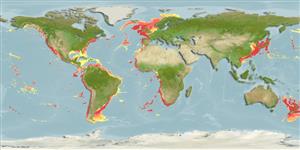
بحري قاعية المعيشة; نطاق العمق 0 - 1570 m (Ref. 10290), usually 120 - 1280 m (Ref. 247). Deep-water; 74°N - 58°S, 169°W - 180°E (Ref. 84631)
Wide-ranging but with patchy distribution. Western Indian Ocean: off South Africa. Western Pacific: off Japan to New Zealand. Eastern Pacific: southern California, USA to northern Chile. Eastern Atlantic: northern Norway to northern Namibia, possibly the eastern Cape of Good Hope, South Africa. Three specimens have been recorded from the western Atlantic (Ref. 13608).
الطول عند النضج الأول / الحجم / وزن / العمر
النضج: Lm 145.0, range 135 - 150 cm
Max length : 200 cm TL ذكر/ مختلط الجنس; (Ref. 26346)
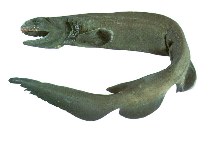
الأشواك الظهرية (المجموع) : 0; شوكة شرجية: 0; فقرات: 146 - 171. Eel-like shark with 6 gill slits, the lower ends of the first gill slits connected t each other across throat (Ref. 247). Dark brown or grey in color, sometimes paler below (Ref. 26346). Dorsal fin small and lobe-like originating over pelvic fin bases to behind anal fin origin (Ref. 6871). Anal fin larger than dorsal fin (Ref. 6871). Pectoral fins small and paddle-shaped (Ref. 6871). Caudal fin with weak ventral lobe and without subterminal notch (Ref. 6871). Terminal mouth with tricuspid teeth in both jaws (Ref. 247).
Body shape (shape guide): elongated.
An uncommon primitive shark (Ref. 26346) found on outer continental and insular shelves and upper slopes, usually between 120 and 1,280 m but occasionally caught at the surface (Ref. 247). Feeds on other sharks, squid and bony fish (Ref. 26346). Ovoviviparous (Ref. 50449), litter size ranges from 2 to 10 (Ref. 37390). Not dangerous but teeth are sharp enough to inflict lacerations on the hands of the unwary scientist examining its mouth (Ref. 247). Incidental in bottom trawl catches and utilized as fishmeal and as food fish (Ref. 247).
Ovoviviparous, embryos feed solely on yolk (Ref. 50449). Number of young 2 to 15 (Ref. 26346). Gestation period is probably very long, one to two years (Ref. 39551). Size at birth 40-60 cm (Ref. 6871). Distinct pairing with embrace (Ref. 205).
Compagno, L.J.V., 1984. FAO Species Catalogue. Vol. 4. Sharks of the world. An annotated and illustrated catalogue of shark species known to date. Part 1 - Hexanchiformes to Lamniformes. FAO Fish. Synop. 125(4/1):1-249. Rome, FAO. (Ref. 247)
حالة القائمة الحمراء للاتحاد الدولي لحفظ الطبيعة والموارد الطبيعية (Ref. 130435: Version 2025-2 (Global))
استخدامات بشرية
مصائد: غير مهمة تجارياً
أدوات
تقارير خاصة
تنزيل XML
مصادر علي الأنترنت
تقديرات تستند إلى النماذج
درجة الحرارة المفضلة (مرجع
123201): 2.3 - 16.4, mean 7.4 °C (based on 1257 cells).
مؤشر التنوع الشُعبي الوراثي (مرجع
82804): PD
50 = 1.0078 [Uniqueness, from 0.5 = low to 2.0 = high].
Bayesian length-weight: a=0.00389 (0.00180 - 0.00842), b=3.12 (2.94 - 3.30), in cm total length, based on all LWR estimates for this body shape (Ref.
93245).
مستوى غذائي (مرجع
69278): 4.2 ±0.4 se; based on diet studies.
المرونه (مرجع
120179): منخفظ جدا, الحد الزمني الأدني لتضاعف عدد أفراد المجتمع أكثر من 14 سنة (Fec=2).
ضعف الصيد (Ref.
59153): Very high vulnerability (90 of 100).
🛈