(كوسه ها و سپرماهيان) (sharks and rays) >
Hexanchiformes (Frill and cow sharks) >
Chlamydoselachidae (Frilled sharks)
Etymology: Chlamydoselachus: chlamydos (Gr.), cloak or mantle, referring to first pair of gill slits that fit like a cloak or frill around throat; selachos (Gr.), a cartilaginous fish (i.e., shark or ray) (See ETYFish); anguineus: Latin for snake-like, referring to its snake- or eel-like shape (See ETYFish).
More on author: Garman.
محیط زیست: محیط زیست / منطقه آب و هوایی / تغييرات عمق / محدوده توزیع
بوم شناسي
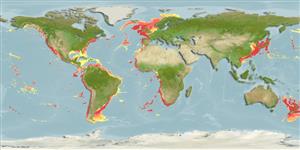
دريايي موجوداتی که در اعماق زیر 200 متر زندگی و تغذیه می کنند; تغييرات عمق 0 - 1570 m (Ref. 10290), usually 120 - 1280 m (Ref. 247). Deep-water; 74°N - 58°S, 169°W - 180°E (Ref. 84631)
Wide-ranging but with patchy distribution. Western Indian Ocean: off South Africa. Western Pacific: off Japan to New Zealand. Eastern Pacific: southern California, USA to northern Chile. Eastern Atlantic: northern Norway to northern Namibia, possibly the eastern Cape of Good Hope, South Africa. Three specimens have been recorded from the western Atlantic (Ref. 13608).
طول در اولین بلوغ / اندازه / وزن / سن
بلوغ: Lm 145.0, range 135 - 150 cm
Max length : 200 cm TL جنس نر / بدون خواص جنسي; (Ref. 26346)
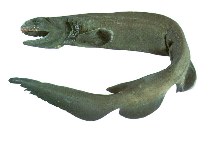
خارهاي باله پشتي (کل) : 0; خارهاي باله مخرجي: 0; مهره ها: 146 - 171. Eel-like shark with 6 gill slits, the lower ends of the first gill slits connected t each other across throat (Ref. 247). Dark brown or grey in color, sometimes paler below (Ref. 26346). Dorsal fin small and lobe-like originating over pelvic fin bases to behind anal fin origin (Ref. 6871). Anal fin larger than dorsal fin (Ref. 6871). Pectoral fins small and paddle-shaped (Ref. 6871). Caudal fin with weak ventral lobe and without subterminal notch (Ref. 6871). Terminal mouth with tricuspid teeth in both jaws (Ref. 247).
Body shape (shape guide): elongated.
An uncommon primitive shark (Ref. 26346) found on outer continental and insular shelves and upper slopes, usually between 120 and 1,280 m but occasionally caught at the surface (Ref. 247). Feeds on other sharks, squid and bony fish (Ref. 26346). Ovoviviparous (Ref. 50449), litter size ranges from 2 to 10 (Ref. 37390). Not dangerous but teeth are sharp enough to inflict lacerations on the hands of the unwary scientist examining its mouth (Ref. 247). Incidental in bottom trawl catches and utilized as fishmeal and as food fish (Ref. 247).
چرخه زندگی و رفتار جفتگیری
بلوغ | تولید مثل | تخم ریزی | تخم ها | باروری | توزاد ( لارو)
Ovoviviparous, embryos feed solely on yolk (Ref. 50449). Number of young 2 to 15 (Ref. 26346). Gestation period is probably very long, one to two years (Ref. 39551). Size at birth 40-60 cm (Ref. 6871). Distinct pairing with embrace (Ref. 205).
Compagno, L.J.V., 1984. FAO Species Catalogue. Vol. 4. Sharks of the world. An annotated and illustrated catalogue of shark species known to date. Part 1 - Hexanchiformes to Lamniformes. FAO Fish. Synop. 125(4/1):1-249. Rome, FAO. (Ref. 247)
وضعيت در فهرست قرمز IUCN (Ref. 130435: Version 2025-2 (Global))
استفاده انسانی
ماهي گيري – شيلات: ارزش تحاري اندك
ابزارها
گزارش های ويژه
بارگيری XML
منابع اينترنتي
تخمینها بر اساس مدلها
دمای ترجیحی (مرجع
123201): 2.3 - 16.4, mean 7.4 °C (based on 1257 cells).
شاخص تنوع فیلوژنتیکی (مرجع
82804): PD
50 = 1.0078 [Uniqueness, from 0.5 = low to 2.0 = high].
Bayesian length-weight: a=0.00389 (0.00180 - 0.00842), b=3.12 (2.94 - 3.30), in cm total length, based on all LWR estimates for this body shape (Ref.
93245).
سطح تروفیک (مرجع
69278): 4.2 ±0.4 se; based on diet studies.
جهندگی (مرجع
120179): خیلی آهسته, كمينه زمان لازم براي دو برابر شدن جمعيت بيش از 14 سال (Fec=2).
آسیبپذیری ماهیگیری (Ref.
59153): Very high vulnerability (90 of 100).
🛈