البيئة: الوسط / المنطقة المناخية / نطاق العمق / نطاق التوزيع
البيئة
بحري مرتبطة بالشعاب; غير مهاجرة; نطاق العمق 10 - 150 m (Ref. 9710), usually 20 - 150 m (Ref. 9710). Tropical; 34°N - 32°S, 31°E - 158°W (Ref. 5222)
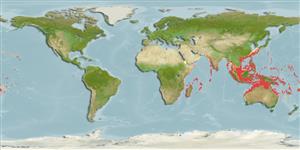
Indo-Pacific: east coast of Africa (Djibouti, Socotra to Durban) to the Line Islands, north to southern Japan, south to southern Queensland (Australia). Not found at the Chagos Archipelago despite intensive survey and not reported from the Red Sea and Persian Gulf.
الطول عند النضج الأول / الحجم / وزن / العمر
النضج: Lm ?, range 28 - ? cm
Max length : 57.0 cm TL ذكر/ مختلط الجنس; (Ref. 5222); common length : 30.0 cm TL ذكر/ مختلط الجنس; (Ref. 5450)
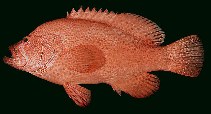
الأشواك الظهرية (المجموع) : 9; الأشعة الظهرية الناعمة (المجموع) : 14 - 16; شوكة شرجية: 3; أشعه شرجية لينه: 9. This species is distinguished by the following characters: body depth greater than or subequal to head length, 2.3-2.7 times in standard length (for specimens 9-41 cm SL); dorsal head profile of adults straight to concave, the nape distinctly convex; pectoral fins subequal to pelvic fins, 1.5-1.7 times in head length for specimens of 15-40 cm length (in specimens larger than 40 cm, the pelvic fins are longer than the pectoral fins); pelvic fins reaching to or beyond anus; ctenoid body scales, cycloid on abdomen. Colour: Adults from Pacific Ocean generally pale reddish to yellowish brown, covered with numerous small brownish red or dark brown spots on head, body, and fins; while the juveniles are dark reddish brown to nearly black, the rear margin of caudal fin and sometimes pectoral fins whitish; or body brownish orange with scattered pale greenish spots, and black spot between upper and middle opercular spines (Ref. 39231, 90102).
Body shape (shape guide): fusiform / normal; Cross section: compressed.
Adults occur in deep lagoon reefs and steep outer reef slopes and in coastal areas with rocky substrates. Juveniles are usually found near sponges or coral heads (Ref. 9710). Adults usually at moderate depths with bommies with large holes, usually occupied by cleaner shrimps (Ref. 48635). They are solitary (Ref. 90102) and are usually caught in depths of 30 to 100 m, but in Madagascar, they occur in depths of 10 to 20 m. They feed on small fishes and crustaceans including shrimps, crabs and stomatopods (Ref. 37816). Females mature at about 28 cm SL and males at about 34 cm SL (Ref. 6448). Are sold in Hong Kong live fish markets (Ref. 27253). They are generally marketed fresh (Ref. 5284) and of commercial importance throughout most of its range. They are primarily caught with hook-and-line, spear, and in traps (Ref. 39231).
دورة الحياة وسلوك التزاوج
النضج | التكاثر | وضع البيض | بيض | الخصوبة | اليرقات
Heemstra, P.C. and J.E. Randall, 1993. FAO Species Catalogue. Vol. 16. Groupers of the world (family Serranidae, subfamily Epinephelinae). An annotated and illustrated catalogue of the grouper, rockcod, hind, coral grouper and lyretail species known to date. Rome: FAO. FAO Fish. Synop. 125(16):382 p. (Ref. 5222)
حالة القائمة الحمراء للاتحاد الدولي لحفظ الطبيعة والموارد الطبيعية (Ref. 130435: Version 2025-2 (Global))
استخدامات بشرية
مصائد: تجاري; لعبة سمكه: نعم
أدوات
تقارير خاصة
تنزيل XML
مصادر علي الأنترنت
تقديرات تستند إلى النماذج
درجة الحرارة المفضلة (مرجع
123201): 21.2 - 29, mean 27.6 °C (based on 2728 cells).
مؤشر التنوع الشُعبي الوراثي (مرجع
82804): PD
50 = 0.5000 [Uniqueness, from 0.5 = low to 2.0 = high].
Bayesian length-weight: a=0.01259 (0.01028 - 0.01541), b=3.05 (3.02 - 3.08), in cm total length, based on LWR estimates for this species (Ref.
93245).
مستوى غذائي (مرجع
69278): 3.8 ±0.54 se; based on food items.
المرونه (مرجع
120179): وسيط, الحد الزمني الأدني لتضاعف عدد أفراد المجتمع 1.4-4.4 سنة (Fec = 42,252).
ضعف الصيد (Ref.
59153): Moderate vulnerability (43 of 100).
🛈
المغذيات (Ref.
124155): Calcium = 36.1 [19.1, 59.7] mg/100g; Iron = 0.452 [0.251, 0.846] mg/100g; Protein = 18.5 [16.7, 20.2] %; Omega3 = 0.164 [0.103, 0.266] g/100g; Selenium = 50.5 [26.0, 86.5] μg/100g; VitaminA = 84.2 [31.1, 255.9] μg/100g; Zinc = 0.812 [0.561, 1.304] mg/100g (wet weight); based on
nutrient studies.