التصنيف / الأسماء
الأسماء الشائعة | مرادفات | Catalog of Fishes(جنس, الانواع) | ITIS | CoL | WoRMS | Cloffa
>
Cichliformes (Cichlids, convict blennies) >
Cichlidae (Cichlids) > Pseudocrenilabrinae
Etymology: Maylandia: In honour of Hans J. Mayland, German ictiologist (Ref. 45335); mossambica: The specific epithet, mossambicus, refers to the area where the species is native; an adjective (Ref. 86409).
Eponymy: Hans-Joachim Mayland (1928–2004) was a German ichthyologist, aquarist, photographer and writer. [...] (Ref. 128868), visit book page.
البيئة: الوسط / المنطقة المناخية / نطاق العمق / نطاق التوزيع
البيئة
; المياه العذبة قاعية التغذية و المعيشة. Tropical; 13°S - 14°S, 34°E - 35°E
Africa: Lake Malawi in Mozambique (Ref. 86490).
الحجم / وزن / العمر
النضج: Lm ? range ? - ? cm
Max length : 8.0 cm SL ذكر/ مختلط الجنس; (Ref. 86409)
وصف مختصر
مفاتيح التعريف | الوصف الخارجي | قياسات المظهر الخارجي
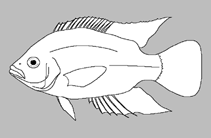
الأشواك الظهرية (المجموع) : 16 - 18; الأشعة الظهرية الناعمة (المجموع) : 8 - 10; شوكة شرجية: 3; أشعه شرجية لينه: 7 - 9. Diagnosis: A moderately-sloped head and bicuspid teeth in the outer row of the jaws place this species in Maylandia (Ref. 86409). Male M. mossambica from Chiloelo are distinguished from those of all other members of Maylandia by the absence of a black submarginal band in the dorsal and by black streaks in the caudal and in the posterior portion of the dorsal fin; male M. mossambica from Chinuni are distinguished from those of all other Maylandia by the absence of a black submarginal band in the dorsal and by a narrow black submarginal band in the anal fin; male M. mossambica from Lumessi are distinguished from all other Maylandia, except M. aurora, M. chrysomallos, and M. xanthos by the absence of a black submarginal band in the dorsal, a yellow ventral half of the head, breast, and dorsal fin, and a light-blue nape; male M. mossambica from Lumessi population differ from those of M. chrysomallos by a yellow dorsal fin which is light-blue in the latter (Ref. 86409). Maylandia mossambica differs from M. aurora by more vertical bars below the dorsal, 7–9 vs. 6, and from M. xanthos by a shorter lower jaw, 27.9–33.8% of head length vs. 34.6–36.7% (Ref. 86409). Based on the colour pattern, female M. mossambica cannot reliably be distinguished from those of most other members of the Aurora group but have 7 or 8 bars below the dorsal fin vs. 6 bars in M. aurora (Ref. 86409).
Body shape (shape guide): fusiform / normal.
دورة الحياة وسلوك التزاوج
النضج | التكاثر | وضع البيض | بيض | الخصوبة | اليرقات
Ciccotto, P.J., A. Konings and J.R. Stauffer Jr., 2011. Descriptions of five new species in the genus Metriaclima (Teleostei: Cichlidae) from Lake Malaŵi, Africa. Zootaxa 2738:1-25. (Ref. 86409)
حالة القائمة الحمراء للاتحاد الدولي لحفظ الطبيعة والموارد الطبيعية (Ref. 130435: Version 2025-2 (Global))
استخدامات بشرية
أدوات
تقارير خاصة
تنزيل XML
مصادر علي الأنترنت
تقديرات تستند إلى النماذج
مؤشر التنوع الشُعبي الوراثي (مرجع
82804): PD
50 = 0.5000 [Uniqueness, from 0.5 = low to 2.0 = high].
Bayesian length-weight: a=0.01445 (0.00671 - 0.03113), b=2.99 (2.82 - 3.16), in cm total length, based on LWR estimates for this (Sub)family-body shape (Ref.
93245).
مستوى غذائي (مرجع
69278): 2.3 ±0.1 se; based on size and trophs of closest relatives
ضعف الصيد (Ref.
59153): Low vulnerability (10 of 100).
🛈