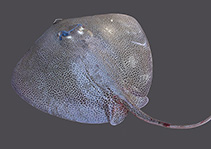
Lớp phụ Cá sụn (cá mập và cá đuối) (sharks and rays) >
Myliobatiformes (Stingrays) >
Dasyatidae (Stingrays) > Urogymninae
Etymology: Himantura: Greek, iman, imantos = thong, strap + Greek, oura = tail (Ref. 45335); tutul: Malay word tutul which means 'spotted', referring to leopard-like markings on the dorsal surface of large specimens (>1 m DW).
Môi trường: môi trường / vùng khí hậu / Mức độ sâu / phạm vi phân phối
Sinh thái học
biển gần đáy. Tropical
Indo-West Pacific: from the coast of Tanzania, to Laccadive Sea and Indo-Malay Archipelago, including Sunda Strait area, southern coast of Java Island, the Bali Sea, eastern South China Sea and Sulu Sea (Sabah).
Bộ gần gũi / Khối lượng (Trọng lượng) / Tuổi
Chín muồi sinh dục: Lm ? range ? - ? cm
Max length : 115.0 cm WD (female)
Vòng đời và hành vi giao phối
Chín muồi sinh dục | Sự tái sinh sản | Đẻ trứng | Các trứng | Sự sinh sản | Ấu trùng
Borsa, P., J.-D. Durand, K.N. Shen, I.S. Arlyza, D.D. Solihin and P. Berrebi, 2013. Himantura tutul sp. nov. (Myliobatoidei: Dasyatidae), a new ocellated whipray from the tropical Indo-West Pacific, described from its cytochrome-oxidase I gene sequence. Comptes Rendus Biologies 336:82-92. (Ref. 93847)
Tình trạng Sách đỏ IUCN (Ref. 130435: Version 2025-2 (Global))
Mối đe dọa đối với con người
Sử dụng của con người
Các nghề cá: buôn bán nhỏ
Các công cụ
Báo cáo đặc biệt
Tải xuống XML
Các nguồn internet
Ước tính dựa trên mô hình
Chỉ số đa dạng phát sinh loài (Tài liệu tham khảo
82804): PD
50 = 0.5002 [Uniqueness, from 0.5 = low to 2.0 = high].
Bayesian length-weight: a=0.01023 (0.00482 - 0.02174), b=3.06 (2.86 - 3.26), in cm total length, based on LWR estimates for this (Sub)family-body shape (Ref.
93245).
Mức dinh dưỡng (Tài liệu tham khảo
69278): 3.6 ±0.5 se; based on size and trophs of closest relatives
Sự dễ bị tổn thương của nghề đánh cá (Ref.
59153): Very high vulnerability (90 of 100).
🛈