分類 / 名前
共通名の | 類義語 | Catalog of Fishes(部類, 種) | ITIS | CoL | WoRMS | Cloffa
板鰓亜鋼(サメとエイ類) (sharks and rays) >
Squatiniformes (Angel sharks) >
Squatinidae (Angel sharks)
Etymology: Squatina: Latin for skate, which angel sharks superficially resemble, presumably tautonymous with Squalus squatina Linnaeus 1758 (no species mentioned) (See ETYFish); japonica: -ica (L.), belonging to: Japan, referring to Nagasaki, type locality (See ETYFish).
More on author: Bleeker.
環境:環境 / 気候帯 / 深さの範囲 / 分布範囲
生態学
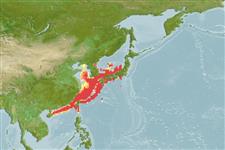
海 底生の. Subtropical; 41°N - 19°N, 111°E - 139°E (Ref. 54906)
Northwest Pacific: Japan, Yellow Sea, Korea, and northern China.
サイズ / 重さ / 年齢
成熟: Lm ? range ? - ? cm
Max length : 200 cm TL オス/雌雄の選別がない; (Ref. 247)
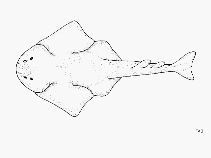
背面の脊椎 (合計) : 0; 肛門の骨: 0. Japanese angelshark Squatina japonica has broad pectoral fins with rounded free rear tips, posterior margin nearly straight, inner margin strongly convex; nasal barbels simple and spatulate. Anterior nasal flaps smooth to weakly fringed; dermal folds on sides of head without lobes. Rear tip of inner margin of pelvic fins considerably anterior to origin of first dorsal; very short hypocercal tail. Rows of moderately large spines on midline of back and tail from head to dorsal fins and between fin bases, and on snout and above eyes. Body color blackish brown with small dark and pale spots; no ocelli (eye-like spot) (Ref. 247, 31369, 12951).
Body shape (shape guide): other.
A little-known angelshark, found on or near the bottom (Ref. 247). Lives in sandy ground. A carnivore that eats benthic animals (Ref. 9137). Ovoviviparous (Ref. 50449). Utilized for human consumption and for preparation of shagreen (Ref. 247).
ライフサイクルと交尾行動
成熟 | 繁殖 | 放精 | 卵 | 生産力 | 幼生
Ovoviviparous, embryos feed solely on yolk (Ref. 50449).
Compagno, L.J.V., 1984. FAO Species Catalogue. Vol. 4. Sharks of the world. An annotated and illustrated catalogue of shark species known to date. Part 1 - Hexanchiformes to Lamniformes. FAO Fish. Synop. 125(4/1):1-249. Rome, FAO. (Ref. 247)
IUCNのレッドリストの状況は (Ref. 130435: Version 2025-2 (Global))
人間の用途
水産業: 少数商業の
用具
特記事項
XMLをダウンロードして下さい
インターネットの情報源
モデルに基づく推定値
好ましい温度 (参照
123201): 5.7 - 20.7, mean 17.3 °C (based on 123 cells).
系統多様性指数 (参照
82804): PD
50 = 0.5000 [Uniqueness, from 0.5 = low to 2.0 = high].
Bayesian length-weight: a=0.00661 (0.00287 - 0.01523), b=3.07 (2.88 - 3.26), in cm total length, based on LWR estimates for this Genus-body shape (Ref.
93245).
栄養段階 (参照
69278): 3.5 ±0.37 se; based on food items.
回復力 (参照
120179): 低い, 4.5年~14年の倍増期間の最小個体群 (Fec assumed to be <100).
漁業の脆弱性 (Ref.
59153): Very high vulnerability (90 of 100).
🛈