ກຸ່ມປາກະດູກອ່ອນ (ເຊັ່ນ: ປາສະຫລາມ, ປາຜາໄລ) (sharks and rays) >
Squatiniformes (Angel sharks) >
Squatinidae (Angel sharks)
Etymology: Squatina: Latin for skate, which angel sharks superficially resemble, presumably tautonymous with Squalus squatina Linnaeus 1758 (no species mentioned) (See ETYFish); oculata: Latin for eyed or having eyes, referring to the symmetrical ocelli seen on some specimens (See ETYFish).
More on author: Bonaparte.
ສະພາບແວດລ້ອມ: ສະພາບແວດລ້ອມ / ເຂດດິນຟ້າອາກາດ / ລະດັບຄວາມເລິກ / ຂອບເຂດການແຈກຢາຍ
ນິເວດວິທະຍາ
ສັດທະເລ ອາໄສຢູ່ໃກ້ໜ້າດິນໃຕ້ພື້ນທ້ອງນ້ຳ; ລະດັບຄວາມເລິກ 5 - 500 m (Ref. 10719), usually 50 - 100 m (Ref. 247). Subtropical; 47°N - 29°S, 17°W - 37°E
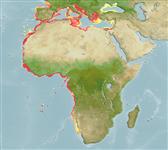
Eastern Atlantic: Mediterranean and Morocco to Angola.
ຂະໜາດ / ນ້ຳໜັກ / ອາຍຸ
ການຈະເລີນເຕັມໄວ: Lm ? range ? - ? cm
Max length : 160 cm TL ຕົວຜູ້/ບໍ່ມີເພດ; (Ref. 247); common length : 120 cm TL ຕົວຜູ້/ບໍ່ມີເພດ; (Ref. )
ຄຳອະທິບາຍສັ້ນໆ
ຕົວທີ່ໃຊ້ໃນການຈຳແນກຊະນິດ | ສະລີລະວິທະຍາ | ການວັດແທກຮູບຮ່າງລັກສະນະພາຍນອກຂອງດິນ,ສັດ,ປາ…
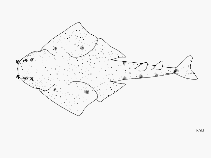
ຄີ (ໜາມ)ແຂງຢູ່ຫຼັງປາ (ທັງໝົດ) : 0. An angelshark with large thorns on snout and above eyes but not on midback, weakly bifurcated nasal barbels and weakly fringed anterior nasal flaps, the first dorsal-fin origin usually well behind the rear tips of pelvic fin, and prominent white spots on body (Ref. 247)
Body shape (shape guide): other; Cross section: flattened.
Found on sand and mud bottom (Ref. 26999) of continental shelves and upper slopes (Ref. 247). Mostly between 50 and 100 m but deeper in the tropics (Ref. 247). Feeds on small fishes (Ref. 247). Ovoviviparous (Ref. 50449). Utilized fresh and dried salted for human consumption; liver oil and hide also used (Ref. 247).
ວົງຈອນຊີວິດ ແລະພຶດຕິກໍາການຫາຄູ່
ການຈະເລີນເຕັມໄວ | ການສືບພັນ | ການວາງໄຂ່ | ໄຂ່ | ຄວາມດົກຂອງໄຂ່ປາ | ຕົວອ່ອນ
Ovoviviparous, embryos feed solely on yolk (Ref. 50449). Size at birth about 24 to 27 cm TL (Ref. 247).
Compagno, L.J.V., 1984. FAO Species Catalogue. Vol. 4. Sharks of the world. An annotated and illustrated catalogue of shark species known to date. Part 1 - Hexanchiformes to Lamniformes. FAO Fish. Synop. 125(4/1):1-249. Rome, FAO. (Ref. 247)
ສະຖານະພາບບັນຊີແດງຂອງ IUCN (Ref. 130435: Version 2025-2 (Global))
ໄພຂົ່ມຂູ່ຕໍ່ມະນຸດ
Traumatogenic
ການນໍາໃຊ້ຂອງມະນຸດ
ການປະມົງ: ທີ່ເປັນການຄ້າໜ້ອຍ
ເຄື່ອງມື
ບົດລາຍງານພິເສດ
ດາວໂຫລດ XML
ແຫຼ່ງອີນເຕີເນັດ
ການຄາດຄະເນໂດຍອີງໃສ່ແບບຈໍາລອງ
ອຸນຫະພູມທີ່ຕ້ອງການ (ເອກະສານອ້າງອີງ
123201): 13 - 19.3, mean 15.3 °C (based on 133 cells).
ດັດຊະນີຄວາມຫຼາກຫຼາຍທາງຊີວະພາບ (ເອກະສານອ້າງອີງ
82804): PD
50 = 0.5000 [Uniqueness, from 0.5 = low to 2.0 = high].
Bayesian length-weight: a=0.00550 (0.00300 - 0.01006), b=3.06 (2.90 - 3.22), in cm total length, based on LWR estimates for this species & Genus-body shape (Ref.
93245).
ຊັ້ນເຂດຮ້ອນ (ເອກະສານອ້າງອີງ
69278): 4.0 ±0.5 se; based on diet studies.
ຄວາມຢືດຢຸ່ນ (ເອກະສານອ້າງອີງ
120179): ຕຳ່, ປະຊາກອນຕຳ່ສຸດທີ່ໃຊ້ເວລາສອງເທົ່າ 4.5 - 14 ປີ (Fec assumed to be <100).
ຄວາມສ່ຽງຕໍ່ການຫາປາ (Ref.
59153): Very high vulnerability (90 of 100).
🛈
ທາດອາຫານ (Ref.
124155): Calcium = 16.4 [3.7, 79.5] mg/100g; Iron = 0.706 [0.185, 2.111] mg/100g; Protein = 19.2 [17.1, 21.1] %; Omega3 = 0.237 [0.112, 0.507] g/100g; Selenium = 36 [11, 102] μg/100g; VitaminA = 9.75 [3.35, 29.81] μg/100g; Zinc = 0.442 [0.216, 0.817] mg/100g (wet weight);