>
Eupercaria/misc (Various families in series Eupercaria) >
Sillaginidae (Smelt-whitings)
Etymology: Sillago: From a locality in Australia.
Eponymy: In Greek mythology, Aeolos was the keeper of the winds and king of the mythical floating island of Aiolia. There is no etymology for the sillago, and the fish might be named after the meaning of the name Aeolos: ‘nimble’. (Ref. 128868), visit book page.
More on authors: Jordan & Evermann.
Lingkungan: lingkungan / zona iklim / kisaran kedalaman / jangkauan distribusi
Ekologi
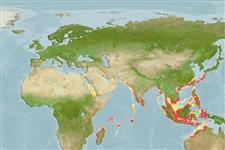
laut dasar (demersal); nir-ruaya; kisaran kedalaman 0 - 60 m (Ref. 6205). Tropical; 34°N - 20°S, 35°E - 132°E (Ref. 6205)
Indo-Pacific: Singapore, Thailand, China, Hong Kong, Taiwan, Philippines, and southern Japan. Possibly distributed throughout the Indo-West Pacific from Delagoa Bay, South Africa to Okinawajima, Japan but not recorded from Australia or southern New Guinea. Very similar to Sillago burrus.
Panjang pada saat jatuh tempo pertama / Ukuran / Berat / umur
Kematangan: Lm 12.0 range ? - ? cm
Max length : 30.0 cm SL jantan/; (Ref. 6205)
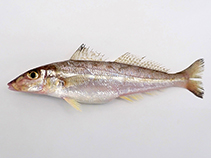
Duri punggung (Keseluruhan (total)) : 12; duri punggung lunak (Keseluruhan (total)) : 18 - 20; Duri dubur: 2; Sirip dubur lunak: 17 - 19; vertebrata, bertulang belakang: 34. Swim bladder with three rudimentary anterolateral extensions instead of four; differs from S. maculata in lacking well developed anterolateral extensions reaching to level of vent. Body color is silvery with scattered dark brown elongate blotches on the sides.
Body shape (shape guide): elongated; Cross section: circular.
Occur in inshore coastal waters, commonly in embayments on silty bottoms (Ref. 9679). Juveniles have been known to burrow in the sand (Ref. 6208). Oviparous (Ref. 205), multiple spawner (Ref. 56320). Small local fisheries exist throughout the range of the species. The flesh is prone to spoil rapidly and the Oriental sillago is not considered as highly as the inshore sillaginids (Ref. 6205). S. aeolus has not been found in association with S. burrus or S. maculata.
McKay, R.J., 1992. FAO Species Catalogue. Vol. 14. Sillaginid fishes of the world (family Sillaginidae). An annotated and illustrated catalogue of the sillago, smelt or Indo-Pacific whiting species known to date. Rome: FAO. FAO Fish. Synop. 125(14):87p. (Ref. 6205)
Status IUCN Red List (Ref. 130435: Version 2025-2 (Global))
ancaman kepada manusia
Harmless
penggunaan manusia
Perikanan: nilai komersial kecil
Alat, peralatan
laporan khas
muat turun XML
Sumber internet
Estimasi berdasarkan model
Suhu yang disukai (Acuan
123201): 25.2 - 29.1, mean 28.5 °C (based on 1092 cells).
Indeks keanekaragaman filogenetik (Acuan
82804): PD
50 = 0.5000 [Uniqueness, from 0.5 = low to 2.0 = high].
Bayesian length-weight: a=0.00617 (0.00365 - 0.01041), b=3.05 (2.90 - 3.20), in cm total length, based on LWR estimates for this species & Genus-body shape (Ref.
93245).
Tingkat Trofik (Acuan
69278): 3.3 ±0.4 se; based on size and trophs of closest relatives
Daya lenting (Acuan
120179): Tinggi, Waktu penggandaan populasi minimum kurang dari 15 bulan (Fec = 11,131).
Kerentanan Penangkapan Ikan (Ref.
59153): Low to moderate vulnerability (27 of 100).
🛈