ກຸ່ມປາກະດູກອ່ອນ (ເຊັ່ນ: ປາສະຫລາມ, ປາຜາໄລ) (sharks and rays) >
Myliobatiformes (Stingrays) >
Dasyatidae (Stingrays) > Dasyatinae
Etymology: Dasyatis: Greek, dasys = rough, dense (Ref. 45335).
More on author: Steindachner.
ສະພາບແວດລ້ອມ: ສະພາບແວດລ້ອມ / ເຂດດິນຟ້າອາກາດ / ລະດັບຄວາມເລິກ / ຂອບເຂດການແຈກຢາຍ
ນິເວດວິທະຍາ
ສັດທະເລ ອາໄສຢູ່ໃກ້ໜ້າດິນໃຕ້ພື້ນທ້ອງນ້ຳ; ລະດັບຄວາມເລິກ 12 - 65 m (Ref. 4438). Tropical; 37°N - 36°S, 18°W - 35°E
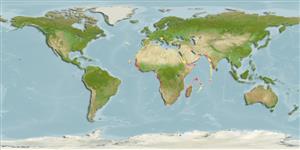
Eastern Atlantic and Mediterranean Sea: Central to South Eastern Atlantic: Morocco, Mauritania to Congo (Ref. 33465) to Natal, South Africa (Ref. 5578); Mediterranean Sea: the records are patchy along the northern coast of Africa, and in Aegean Sea and Levantine Basin, most likely due to misidentification with other Dasyatidae spp. (Ref. 122045 and others cited).
ຂະໜາດ / ນ້ຳໜັກ / ອາຍຸ
ການຈະເລີນເຕັມໄວ: Lm ? range ? - ? cm
Max length : 74.5 cm TL ຕົວຜູ້/ບໍ່ມີເພດ; (Ref. 123700)
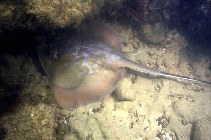
ຄີ (ໜາມ)ແຂງຢູ່ຫຼັງປາ (ທັງໝົດ) : 0. Conspicuous bright blue blotches and branching lines on a golden brown disc; snout and disc angular, and tail less than twice body length with a short upper caudal finfold, and a longer lower one falling far in front of tail tip; disc without thorns; usually one sting (Ref. 5578). Underside white, tail darker and without bands (Ref. 5578).
Body shape (shape guide): other.
Close inshore, found on sandy beaches and in shallow bays (Ref. 5578), sometimes near rocky reefs (Ref. 12951). Found in deeper offshore areas during the winter season (Ref. 12951). Feeds on crabs, mantis shrimps, amphipods, worms, and fishes (Ref. 12951). Ovoviviparous (Ref. 50449). Minimum depth reported from Ref. 4438. Disc width measures 30 cm. Its thorny, venomous hooks can cause painful injuries (Ref. 5377).
ວົງຈອນຊີວິດ ແລະພຶດຕິກໍາການຫາຄູ່
ການຈະເລີນເຕັມໄວ | ການສືບພັນ | ການວາງໄຂ່ | ໄຂ່ | ຄວາມດົກຂອງໄຂ່ປາ | ຕົວອ່ອນ
Exhibit ovoviparity (aplacental viviparity), with embryos feeding initially on yolk, then receiving additional nourishment from the mother by indirect absorption of uterine fluid enriched with mucus, fat or protein through specialised structures (Ref. 50449). With 1 to 4 in a litter (Ref. 12951). Distinct pairing with embrace (Ref. 205).
Cowley, P.D. and L.J.V. Compagno, 1993. A taxonomic re-evaluation of the blue stingray from southern Africa (Myliobatiformes: Dasyatidae). S. Afr. J. Mar. Sci. 13:135-149. (Ref. 33465)
ສະຖານະພາບບັນຊີແດງຂອງ IUCN (Ref. 130435: Version 2025-2 (Global))
ໄພຂົ່ມຂູ່ຕໍ່ມະນຸດ
Harmless
ການນໍາໃຊ້ຂອງມະນຸດ
ການປະມົງ: ທີ່ບໍ່ມີຄວາມສົນໃຈ; ຊະນິດປາທີ່ຖືກນຳໃຊ້ເຂົ້າໃນການຫາເພື່ອເປັນເກມກິລາ: ແມ່ນ
ເຄື່ອງມື
ບົດລາຍງານພິເສດ
ດາວໂຫລດ XML
ແຫຼ່ງອີນເຕີເນັດ
ການຄາດຄະເນໂດຍອີງໃສ່ແບບຈໍາລອງ
ອຸນຫະພູມທີ່ຕ້ອງການ (ເອກະສານອ້າງອີງ
123201): 20.6 - 28.1, mean 26.3 °C (based on 164 cells).
ດັດຊະນີຄວາມຫຼາກຫຼາຍທາງຊີວະພາບ (ເອກະສານອ້າງອີງ
82804): PD
50 = 0.5020 [Uniqueness, from 0.5 = low to 2.0 = high].
Bayesian length-weight: a=0.00363 (0.00174 - 0.00758), b=3.13 (2.95 - 3.31), in cm total length, based on LWR estimates for this species & (Sub)family-body (Ref.
93245).
ຊັ້ນເຂດຮ້ອນ (ເອກະສານອ້າງອີງ
69278): 3.6 ±0.53 se; based on food items.
ຄວາມຢືດຢຸ່ນ (ເອກະສານອ້າງອີງ
120179): ຕຳ່ຫຼາຍ, ປະຊາກອນຕຳ່ສຸດທີ່ໃຊ້ເວລາສອງເທົ່າຫຼາຍກວ່າ 14 ປີ (Fec=1-4).
ຄວາມສ່ຽງຕໍ່ການຫາປາ (Ref.
59153): Moderate to high vulnerability (50 of 100).
🛈