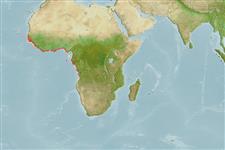
ສະພາບແວດລ້ອມ: ສະພາບແວດລ້ອມ / ເຂດດິນຟ້າອາກາດ / ລະດັບຄວາມເລິກ / ຂອບເຂດການແຈກຢາຍ
ນິເວດວິທະຍາ
ສັດທະເລ; ນ້ຳຈືດ; ນ້ຳກ່ອຍ ອາໄສຢູ່ໃກ້ໜ້າດິນໃຕ້ພື້ນທ້ອງນ້ຳ; ປາທີ່ມີການເຄື່ອນຍ້າຍຈາກທະເລໄປຫານ້ຳຈືດ ແລະນ້ຳຈືດຫາທະເລ (Ref. 46888). Tropical; 16°N - 18°S, 19°W - 14°E
ຂະໜາດ / ນ້ຳໜັກ / ອາຍຸ
ການຈະເລີນເຕັມໄວ: Lm ? range ? - ? cm
Max length : 12.4 cm TL ຕົວຜູ້/ບໍ່ມີເພດ; (Ref. 57413)
ຄີ (ໜາມ)ແຂງຢູ່ຫຼັງປາ (ທັງໝົດ) : 7 - 8; ຄີຫຼັງຂອງປາ (ຄີອ່ອນ) (ທັງໝົດ) : 7 - 9; ຄີ(ໜາມ) ແຂງຢູ່ຄີກົ້ນປາ
ກຸ່ມປາກະດູກແຂງ
ຄວາມຖີ່ຂອງກຸ່ມຖ່າຍທອດພັນ
ປາທີ່ມີການເຄື່ອນຍ້າຍຈາກທະເລໄປຫານ້ຳຈືດ ແລະນ້ຳຈືດຫາທະເລ
ປາທີ່ມີການເຄື່ອນຍ້າຍຈາກທະເລແລະໄປໄຂ່ຢູ່ນ້ຳຈືດ
ຄີກົ້ນຂອງປາ
ສັດທີ່ມີກະດູກສັນຫັຼງ
ການຖ່າຍທອດທາງກຳມະພັນຈາກພໍ່ແມ່ຫາລູກ: 1; ຄີກົ້ນຂອງປາ: 9 - 10. Diagnosis: 14-24 predorsal scales, usually 19-22; cheek and opercle scaled (Ref. 81660). 28-33 scales in longitudinal series (including 2 or 3 scales on caudal fin base)(Ref. 57413). 8-12 scales in rearward transverse series (Ref. 57413, 81660). 1st dorsal fin: VI-VII; 2nd dorsal fin: I,7-9; anal fin: I,9-10; pectoral fins: 11-14 (Ref. 57413, 81660). Caudal fin rounded with 15 segmented rays, 13 of which are branched (Ref. 57413). Sensory canals absent on head (Ref. 57413), sensory papillae on cheek form horizontal rows (Ref. 81660). About 10 gill rakers on upper limb, and 20 on lower limb of first gill arch (Ref. 57413), 29-37 in total (Ref. 81660).
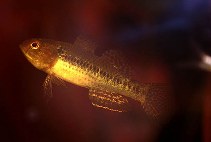
Coloration: Preserved specimens: brownish (Ref. 57413, 81660) or tan (Ref. 81660) dorsally on head and body. Ventral surface of belly pale (Ref. 57413). Most mid-lateral scales with spots equal in depth to scales forming an interrupted band extending from pectoral fin base to caudal fin base (Ref. 81660). About 2 longitudinal bands sometimes present just dorsal to midline of scales (Ref. 57413). Dark brown or black spot just posterior and dorsal to operculum (Ref. 57413), above the pectoral fin base on side of nape extending onto upper pectoral fin base (Ref. 81660), sometimes a smaller spot below this (Ref. 57413). Dorsum with 7-8 irregular dark saddles, becoming lighter ventrally below the mid-lateral row of spots; thin infraorbital bar reaching from eye just behind angle of jaw to edge of gular fold; a pair of dark bands running posteriorly from lower half of eye to edge of preopercle (Ref. 81660). Vertical brown bar at base of caudal fin (Ref. 57413). First dorsal fin with 3-4 horizontal bands, second dorsal fin with 3-4 rows of interradial spots (Ref. 81660). Caudal fin with several vertical, crescentric bands of small spots (Ref. 57413, 81660). Anal fin light brown (Ref. 57413), with 3 discretely edged horizontal bands (Ref. 81660). Pelvics light brown with central rays sometimes darker (Ref. 57413), dark line crossing bases of rays (Ref. 81660). Pectorals transparent (Ref. 57413) or dusky (Ref. 81660). Live specimens: pale olive-green on back and white on belly; red-brown spots on 1st dorsal, 2nd dorsal and anal fins, latter 2 also with light yellow spots near distal margin; caudal fin with red-brown spots near base, and yellow or orange spots posteriorly (Ref. 57413).
Body shape (shape guide): fusiform / normal.
Facultative air-breathing in the genus (Ref. 126274); Inhabits brackish water estuaries, creeks, lagoons and mangrove areas; occasionally enters freshwater (Ref. 7391, 57413, 81660). Known to be tolerant of wide range of salinity. Used as bio-control agents, e.g., use in control of mosquito larva (Ref. 42628). Endemic to West African coastline from Senegal to the Cunene River in Namibia (Ref. 92840).
ວົງຈອນຊີວິດ ແລະພຶດຕິກໍາການຫາຄູ່
ການຈະເລີນເຕັມໄວ | ການສືບພັນ | ການວາງໄຂ່ | ໄຂ່ | ຄວາມດົກຂອງໄຂ່ປາ | ຕົວອ່ອນ
Spawns in caves or on top of plants. Sometimes several females spawn with one male.
Harrison, I.J., P.J. Miller and F. Pezold, 2003. Eleotridae. p. 670-690 In C. Lévêque, D. Paugy and G.G. Teugels (eds.) Faune des poissons d'eaux douce et saumâtres de l'Afrique de l'Ouest, Tome 2. Coll. Faune et Flore tropicales 40. Musée Royal de l'Afrique Centrale, Tervuren, Belgique, Museum National d'Histoire Naturalle, Paris, France and Institut de Recherche pour le Développement, Paris, France. 815 p. (Ref. 57413)
ສະຖານະພາບບັນຊີແດງຂອງ IUCN (Ref. 130435: Version 2025-2 (Global))
ໄພຂົ່ມຂູ່ຕໍ່ມະນຸດ
Harmless
ການນໍາໃຊ້ຂອງມະນຸດ
ການປະມົງ: ທີ່ບໍ່ມີຄວາມສົນໃຈ
ເຄື່ອງມື
ບົດລາຍງານພິເສດ
ດາວໂຫລດ XML
ແຫຼ່ງອີນເຕີເນັດ
ການຄາດຄະເນໂດຍອີງໃສ່ແບບຈໍາລອງ
ອຸນຫະພູມທີ່ຕ້ອງການ (ເອກະສານອ້າງອີງ
123201): 23.4 - 27.9, mean 26.5 °C (based on 64 cells).
ດັດຊະນີຄວາມຫຼາກຫຼາຍທາງຊີວະພາບ (ເອກະສານອ້າງອີງ
82804): PD
50 = 0.5312 [Uniqueness, from 0.5 = low to 2.0 = high].
Bayesian length-weight: a=0.00955 (0.00531 - 0.01717), b=3.12 (2.96 - 3.28), in cm total length, based on LWR estimates for this species & (Sub)family-body (Ref.
93245).
ຊັ້ນເຂດຮ້ອນ (ເອກະສານອ້າງອີງ
69278): 2.5 ±0.23 se; based on food items.
ຄວາມຢືດຢຸ່ນ (ເອກະສານອ້າງອີງ
120179): ສູງ, ປະຊາກອນຕຳ່ສຸດທີ່ໃຊ້ເວລາສອງໜ້ອຍກວ່າ 15 ເດືອນ (Preliminary K or Fecundity.).
ຄວາມສ່ຽງຕໍ່ການຫາປາ (Ref.
59153): Low vulnerability (10 of 100).
🛈