Окружающая среда: среда / климатическая зона / пределы глубины / диапазон распространения
экология
морской; пресноводный; солоноватоводный демерсальный; амфидромный (Ref. 138269). Temperate; 6°C - 20°C (Ref. 2060); 37°S - 44°S
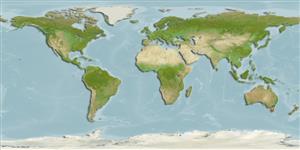
Oceania: widely separated populations in southeastern and southwestern Australia.
Размер / Вес / Возраст
половая зрелость: Lm ? range ? - ? cm
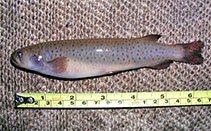
Max length : 20.0 cm SL самец/пол неопределен; (Ref. 44894); common length : 10.0 cm SL самец/пол неопределен; (Ref. )
Facultative air-breathing in the genus (Ref. 126274); Adults occur in still or slow-flowing waters at low elevations close to the sea; most abundant along shore margins in rocky areas. They are found around plants, rocks or logs on the margins of still or flowing rivers, streams and lakes (Ref. 44894). Marine juvenile stage is present which is indicative of a diadromous life cycle. Spawning takes place from autumn to winter, among aquatic vegetation. Newly hatched larvae drift downcurrent and out to sea where they spend their first few months, eventually returning to fresh water during spring among annual whitebait migrations. In lacustrine and other landlocked populations, adults move upstream into feeder streams to spawn. The larvae are then swept downstream into lakes (Ref. 44894). Feeds mainly on aquatic and terrestrial insects.
Жизненный цикл и брачное поведение
половая зрелость | размножение | нерест | икра | Плодовитость | личинки
Paxton, J.R., D.F. Hoese, G.R. Allen and J.E. Hanley, 1989. Pisces. Petromyzontidae to Carangidae. Zoological Catalogue of Australia, Vol. 7. Australian Government Publishing Service, Canberra, 665 p. (Ref. 7300)
Статус Красного Списка МСОП (Ref. 130435: Version 2025-2 (Global))
Угроза для людей
Harmless
Использование человеком
рыболовство: интереса не представляет
дополнительная информация
инструменты
Специальные отчеты
Скачать в формате XML
ресурсы в Интернет
Оценки, основанные на моделях
Предпочтительная температура (ссылка
123201): 13.2 - 17.1, mean 15.4 °C (based on 135 cells).
Индекс филогенетического разнообразия (ссылка
82804): PD
50 = 0.5000 [Uniqueness, from 0.5 = low to 2.0 = high].
Bayesian length-weight: a=0.00490 (0.00206 - 0.01165), b=3.12 (2.91 - 3.33), in cm total length, based on LWR estimates for this (Sub)family-body shape (Ref.
93245).
Трофический уровень (ссылка
69278): 2.9 ±0.45 se; based on food items.
устойчивость к внешним воздействиям (ссылка
120179): средний (среднего размера), минимальное время удвоения популяции 1.4-4.4 года (Fec=1,175).
Уязвимость рыбной ловли (Ref.
59153): Low vulnerability (14 of 100).
🛈