>
Scombriformes (Mackerels) >
Scombridae (Mackerels, tunas, bonitos) > Scombrinae
Etymology: Scomberomorus: Latin, scomber = mackerel + Greek, moros = silly, stupid (Ref. 45335).
More on author: Macleay.
محیط زیست: محیط زیست / منطقه آب و هوایی / تغييرات عمق / محدوده توزیع
بوم شناسي
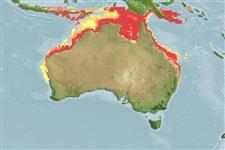
دريايي; لب شور pelagic-neritic; اقیانوس رو (Ref. 51243); تغييرات عمق ? - 100 m (Ref. 6390). Tropical; 7°S - 30°S, 112°E - 157°E (Ref. 168)
Western Pacific: southern Papua New Guinea and northern Australia, from Shark Bay, Western Australia to northern New South Wales. Reports of this species from Thailand and Malaysia are based on misidentifications.
طول در اولین بلوغ / اندازه / وزن / سن
بلوغ: Lm ?, range 75 - ? cm
Max length : 120 cm FL جنس نر / بدون خواص جنسي; (Ref. 168); بيشينه وزن گزارش شده: 10.0 kg (Ref. 168)
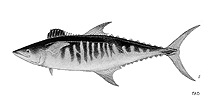
خارهاي باله پشتي (کل) : 13 - 15; شعاع نرم باله پشتي (کل) : 19 - 22; خارهاي باله مخرجي: 0; شعاع نرم باله مخرجي: 19 - 22; مهره ها: 44 - 46. Interpelvic process small and bifid. Lateral line gradually curving down toward caudal peduncle. Intestine with 2 folds and 3 limbs. Swim bladder absent. Body covered with small scales. Juveniles (less than 10 cm) marked with 12-20 vertical bands which becomes less distinct or break into spots in larger fish.
Body shape (shape guide): fusiform / normal; Cross section: oval.
Found more commonly around coastal headlands and rocky reefs but are also caught offshore (Ref. 6390). Juveniles (4.5 to 10 cm length) are commonly encountered during November along the beaches of Townsville, Queensland and grow to twice this size by January. They are pelagic predators, feeding exclusively on baitfish (sardines and herrings (Ref. 30572). Caught also with set lines aside from trolling with small lures or cut bait. Marketed fresh and frozen; eaten fried, broiled and baked (Ref. 9988).
چرخه زندگی و رفتار جفتگیری
بلوغ | تولید مثل | تخم ریزی | تخم ها | باروری | توزاد ( لارو)
Collette, B.B. and C.E. Nauen, 1983. FAO Species Catalogue. Vol. 2. Scombrids of the world. An annotated and illustrated catalogue of tunas, mackerels, bonitos and related species known to date. Rome: FAO. FAO Fish. Synop. 125(2):137 p. (Ref. 168)
وضعيت در فهرست قرمز IUCN (Ref. 130435: Version 2025-2 (Global))
خطر برای انسان ها
Reports of ciguatera poisoning (Ref. 6390)
استفاده انسانی
ماهي گيري – شيلات: تجاري; ماهي ها ي سرگرم كننده: بله; طعمه: occasionally
ابزارها
گزارش های ويژه
بارگيری XML
منابع اينترنتي
تخمینها بر اساس مدلها
دمای ترجیحی (مرجع
123201): 25.9 - 28.7, mean 27.7 °C (based on 506 cells).
شاخص تنوع فیلوژنتیکی (مرجع
82804): PD
50 = 0.5000 [Uniqueness, from 0.5 = low to 2.0 = high].
Bayesian length-weight: a=0.00832 (0.00379 - 0.01824), b=3.03 (2.86 - 3.20), in cm total length, based on LWR estimates for this Genus-body shape (Ref.
93245).
سطح تروفیک (مرجع
69278): 4.5 ±0.80 se; based on food items.
جهندگی (مرجع
120179): متوسط, كمينه زمان لازم براي دو برابر شدن جمعيت 4/1 – 4/4 سال (K=0.40; tm=1-2; tmax=12).
آسیبپذیری ماهیگیری (Ref.
59153): Moderate to high vulnerability (49 of 100).
🛈
مواد مغذی (Ref.
124155): Calcium = 31.7 [14.5, 120.3] mg/100g; Iron = 0.836 [0.391, 2.033] mg/100g; Protein = 21 [20, 22] %; Omega3 = 0.287 [0.173, 0.471] g/100g; Selenium = 64.2 [23.0, 279.1] μg/100g; VitaminA = 15.9 [3.3, 73.6] μg/100g; Zinc = 0.701 [0.470, 1.102] mg/100g (wet weight);