Ταξινόμηση / Ονόματα
Κοινά ονόματα | Συνώνυμα | Catalog of Fishes(Γένος, Είδη) | ITIS | CoL | WoRMS | Cloffa
>
Siluriformes (Catfishes) >
Akysidae (Stream catfishes) > Akysinae
Etymology: Akysis: Derived from Greek, a = without + Greek, kysthos = bladder (Ref. 45335); pulvinatus: From the Latin pulvinus, an elevation, in reference to the long-based adipose fin of this species.
Περιβάλλον: περιβάλλον / κλιματική ζώνη / εύρος βάθους / εύρος διανομής
Οικολογία
; Γλυκού νερού βενθικό(ς); pH range: 8.0 - ?. Tropical; 29°C - ?
Asia: upper Tapi River drainage and hillstreams flowing into the Andaman Sea on the western half of the Isthmus of Kra in Thailand.
Μέγεθος / Βάρος / Ηλικία
Γεννητική Ωρίμανση: Lm ? range ? - ? cm
Max length : 3.0 cm SL αρσενικό/απροσδιόριστο; (Ref. 59363)
Σύντομη περιγραφή
Κλείδες προσδιορισμού | Μορφολογία | Μορφομετρία
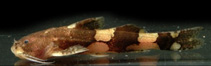
Ραχιαίες άκανθες (συνολικά) : 1; Μαλακές ραχιαίες ακτίνες (συνολικά) : 5; Μαλακές εδρικές ακτίνες: 9 - 10; Σπόνδυλοι: 31. Differs from congeners (except for Akysis brachybarbatus, Akysis fuliginatus, Akysis longifilis, Akysis pictus, Akysis prashadi and Akysis vespa by the absence of serrations on the posterior edge of the pectoral spine. Can be differentiated from Akysis brachybarbatus in having deeper caudal peduncle (9.4-10.% SL vs. 7.9-8.1), narrower head (21.9-25.1% SL vs. 25.5-28.0) and the presence (vs. absence) of a yellow snout; and fromAkysis fuliginatus in having a longer adipose-fin base (23.0-25.2% SL vs. 15.1-19.5), a gently forked (vs. truncate) caudal fin, and presence (vs. absence) of light-colored markings on the head and body, and from Akysis longifilis in possessing a deeper body (13.2-16.0% SL vs. 9.7-13.6) and caudal peduncle (9.4-10.3% SL 5.6-7.2), shorter nasal and maxillary barbels (reaching posterior margin of orbit vs. dorsalmost limit of gill opening, 13.9-57.5% HL vs. 67.4-96.4, and reaching middle of pectoral-fin base vs. vertical through middle of dorsal-fin base, 78.5-105.0% HL vs. 123.2-159.6 respectively). Distinguished from Akysis pictus and Akysis prashadi in having a longer head (27.6-29.8% SL vs. 20.9-25.1) and the presence (vs. absence) of a yellow snout. Differs further from Akysis pictus in having more rounded pale colored patches on the body (vs. with elongate pale patches that typically extend throughout the dorsal surface of the entire postdorsal distance. Can be diagnosed from Akysis vespa in having a longer adipose-fin base (23.0-25.2% SL vs. 16.2-21.6), deeper caudal peduncle (9.4-10.3% SL vs. 7.6-9.1) and caudal fin with lower lobe longer than upper (vs. both lobes approximately equal). Differs from Akysis varius in having a gently forked (vs. truncate) caudal fin (Ref. 59363).
Body shape (shape guide): elongated.
The type locality of this species is a stream characterized by both slow-flowing and riffle areas, clear water and substrate consisted of gravel and larger rocks. This catfish occurs between the rocks, particularly in the riffle areas.
Κύκλος ζωής και συμπεριφορά ζευγαρώματος
Γεννητική Ωρίμανση | Αναπαραγωγή | Γεννοβολία | Αβγά | Γονιμότητα | Προνύμφες
Ng, H.H., 2007. Akysis pulvinatus, a new species of catfish (Siluriformes: Akysidae) from southern Thailand. Zootaxa 1608:51-58. (Ref. 59363)
Κατάσταση Κόκκινου Καταλόγου IUCN (Ref. 130435: Version 2025-2 (Global))
Απειλή για τον άνθρωπο
Harmless
Ανθρώπινες χρήσεις
αλιεία: χωρίς ενδιαφέρον
Εργαλεία
Ειδικές εκθέσεις
Λήψη XML
Διαδικτυακές πηγές
Εκτιμήσεις βάσει μοντέλων
Δείκτης φυλογενετικής ποικιλότητας (Αναφ.
82804): PD
50 = 0.5000 [Uniqueness, from 0.5 = low to 2.0 = high].
Bayesian length-weight: a=0.00389 (0.00180 - 0.00842), b=3.12 (2.94 - 3.30), in cm total length, based on all LWR estimates for this body shape (Ref.
93245).
Τροφικό Επίπεδο (Αναφ.
69278): 3.3 ±0.5 se; based on size and trophs of closest relatives
Ευπάθεια στην αλιεία (Ref.
59153): Low vulnerability (10 of 100).
🛈