>
Siluriformes (Catfishes) >
Akysidae (Stream catfishes) > Akysinae
Etymology: Akysis: Derived from Greek, a = without + Greek, kysthos = bladder (Ref. 45335); pulvinatus: From the Latin pulvinus, an elevation, in reference to the long-based adipose fin of this species.
Môi trường: môi trường / vùng khí hậu / Mức độ sâu / phạm vi phân phối
Sinh thái học
; nước ngọt gần đáy; pH range: 8.0 - ?. Tropical; 29°C - ?
Asia: upper Tapi River drainage and hillstreams flowing into the Andaman Sea on the western half of the Isthmus of Kra in Thailand.
Bộ gần gũi / Khối lượng (Trọng lượng) / Tuổi
Chín muồi sinh dục: Lm ? range ? - ? cm
Max length : 3.0 cm SL con đực/không giới tính; (Ref. 59363)
Mô tả ngắn gọn
Khóa để định loại | Hình thái học | Sinh trắc học
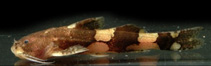
Các tia vây lưng cứng (tổng cộng) : 1; Các vây lưng mềm (tổng cộng) : 5; Tia mềm vây hậu môn: 9 - 10; Động vật có xương sống: 31. Differs from congeners (except for Akysis brachybarbatus, Akysis fuliginatus, Akysis longifilis, Akysis pictus, Akysis prashadi and Akysis vespa by the absence of serrations on the posterior edge of the pectoral spine. Can be differentiated from Akysis brachybarbatus in having deeper caudal peduncle (9.4-10.% SL vs. 7.9-8.1), narrower head (21.9-25.1% SL vs. 25.5-28.0) and the presence (vs. absence) of a yellow snout; and fromAkysis fuliginatus in having a longer adipose-fin base (23.0-25.2% SL vs. 15.1-19.5), a gently forked (vs. truncate) caudal fin, and presence (vs. absence) of light-colored markings on the head and body, and from Akysis longifilis in possessing a deeper body (13.2-16.0% SL vs. 9.7-13.6) and caudal peduncle (9.4-10.3% SL 5.6-7.2), shorter nasal and maxillary barbels (reaching posterior margin of orbit vs. dorsalmost limit of gill opening, 13.9-57.5% HL vs. 67.4-96.4, and reaching middle of pectoral-fin base vs. vertical through middle of dorsal-fin base, 78.5-105.0% HL vs. 123.2-159.6 respectively). Distinguished from Akysis pictus and Akysis prashadi in having a longer head (27.6-29.8% SL vs. 20.9-25.1) and the presence (vs. absence) of a yellow snout. Differs further from Akysis pictus in having more rounded pale colored patches on the body (vs. with elongate pale patches that typically extend throughout the dorsal surface of the entire postdorsal distance. Can be diagnosed from Akysis vespa in having a longer adipose-fin base (23.0-25.2% SL vs. 16.2-21.6), deeper caudal peduncle (9.4-10.3% SL vs. 7.6-9.1) and caudal fin with lower lobe longer than upper (vs. both lobes approximately equal). Differs from Akysis varius in having a gently forked (vs. truncate) caudal fin (Ref. 59363).
Body shape (shape guide): elongated.
The type locality of this species is a stream characterized by both slow-flowing and riffle areas, clear water and substrate consisted of gravel and larger rocks. This catfish occurs between the rocks, particularly in the riffle areas.
Vòng đời và hành vi giao phối
Chín muồi sinh dục | Sự tái sinh sản | Đẻ trứng | Các trứng | Sự sinh sản | Ấu trùng
Ng, H.H., 2007. Akysis pulvinatus, a new species of catfish (Siluriformes: Akysidae) from southern Thailand. Zootaxa 1608:51-58. (Ref. 59363)
Tình trạng Sách đỏ IUCN (Ref. 130435: Version 2025-2 (Global))
Mối đe dọa đối với con người
Harmless
Sử dụng của con người
Các nghề cá: không ích lợi (thú vị)
Các công cụ
Báo cáo đặc biệt
Tải xuống XML
Các nguồn internet
Ước tính dựa trên mô hình
Chỉ số đa dạng phát sinh loài (Tài liệu tham khảo
82804): PD
50 = 0.5000 [Uniqueness, from 0.5 = low to 2.0 = high].
Bayesian length-weight: a=0.00389 (0.00180 - 0.00842), b=3.12 (2.94 - 3.30), in cm total length, based on all LWR estimates for this body shape (Ref.
93245).
Mức dinh dưỡng (Tài liệu tham khảo
69278): 3.3 ±0.5 se; based on size and trophs of closest relatives
Sự dễ bị tổn thương của nghề đánh cá (Ref.
59153): Low vulnerability (10 of 100).
🛈