Classificazione / Nomi
Nomi Comuni | Sinonimi | Catalog of Fishes(Genere, Specie) | ITIS | CoL | WoRMS | Cloffa
>
Siluriformes (Catfishes) >
Akysidae (Stream catfishes) > Akysinae
Etymology: Akysis: Derived from Greek, a = without + Greek, kysthos = bladder (Ref. 45335); pulvinatus: From the Latin pulvinus, an elevation, in reference to the long-based adipose fin of this species.
Ambiente: milieu / zona climatica / distribuzione batimetrica / gamma di distribuzione
Ecologia
; acqua dolce demersale; pH range: 8.0 - ?. Tropical; 29°C - ?
Asia: upper Tapi River drainage and hillstreams flowing into the Andaman Sea on the western half of the Isthmus of Kra in Thailand.
Dimensione / Peso / Età
Maturità: Lm ? range ? - ? cm
Max length : 3.0 cm SL maschio/sesso non determinato; (Ref. 59363)
Breve descrizione
Chiavi di identificazione | Morfologia | Morfometria
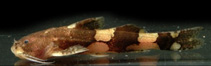
Spine dorsali (totale) : 1; Raggi dorsali molli (totale) : 5; Raggi anali molli: 9 - 10; Vertebre: 31. Differs from congeners (except for Akysis brachybarbatus, Akysis fuliginatus, Akysis longifilis, Akysis pictus, Akysis prashadi and Akysis vespa by the absence of serrations on the posterior edge of the pectoral spine. Can be differentiated from Akysis brachybarbatus in having deeper caudal peduncle (9.4-10.% SL vs. 7.9-8.1), narrower head (21.9-25.1% SL vs. 25.5-28.0) and the presence (vs. absence) of a yellow snout; and fromAkysis fuliginatus in having a longer adipose-fin base (23.0-25.2% SL vs. 15.1-19.5), a gently forked (vs. truncate) caudal fin, and presence (vs. absence) of light-colored markings on the head and body, and from Akysis longifilis in possessing a deeper body (13.2-16.0% SL vs. 9.7-13.6) and caudal peduncle (9.4-10.3% SL 5.6-7.2), shorter nasal and maxillary barbels (reaching posterior margin of orbit vs. dorsalmost limit of gill opening, 13.9-57.5% HL vs. 67.4-96.4, and reaching middle of pectoral-fin base vs. vertical through middle of dorsal-fin base, 78.5-105.0% HL vs. 123.2-159.6 respectively). Distinguished from Akysis pictus and Akysis prashadi in having a longer head (27.6-29.8% SL vs. 20.9-25.1) and the presence (vs. absence) of a yellow snout. Differs further from Akysis pictus in having more rounded pale colored patches on the body (vs. with elongate pale patches that typically extend throughout the dorsal surface of the entire postdorsal distance. Can be diagnosed from Akysis vespa in having a longer adipose-fin base (23.0-25.2% SL vs. 16.2-21.6), deeper caudal peduncle (9.4-10.3% SL vs. 7.6-9.1) and caudal fin with lower lobe longer than upper (vs. both lobes approximately equal). Differs from Akysis varius in having a gently forked (vs. truncate) caudal fin (Ref. 59363).
Body shape (shape guide): elongated.
The type locality of this species is a stream characterized by both slow-flowing and riffle areas, clear water and substrate consisted of gravel and larger rocks. This catfish occurs between the rocks, particularly in the riffle areas.
Ciclo vitale e comportamento di accoppiamento
Maturità | Riproduzione | Deposizione | Uova | Fecondità | Larve
Ng, H.H., 2007. Akysis pulvinatus, a new species of catfish (Siluriformes: Akysidae) from southern Thailand. Zootaxa 1608:51-58. (Ref. 59363)
Stato della Lista Rossa IUCN (Ref. 130435: Version 2025-2 (Global))
Minaccia per l'uomo
Harmless
Usi umani
Pesca: di nessun interesse
Strumenti
Rapporti speciali
Scarica XML
Fonti Internet
Stime basate su modelli
Indice di diversità filogenetica (Fonte Biblio.
82804): PD
50 = 0.5000 [Uniqueness, from 0.5 = low to 2.0 = high].
Bayesian length-weight: a=0.00389 (0.00180 - 0.00842), b=3.12 (2.94 - 3.30), in cm total length, based on all LWR estimates for this body shape (Ref.
93245).
Livello trofico (Fonte Biblio.
69278): 3.3 ±0.5 se; based on size and trophs of closest relatives
Vulnerabilità della pesca (Ref.
59153): Low vulnerability (10 of 100).
🛈