>
Cypriniformes (Carps) >
Cyprinidae (Minnows or carps) > Cyprininae
Etymology: Carassius: Latinization of , karass, karausche, European crucian carp (Ref. 45335).
More on author: Bloch.
ສະພາບແວດລ້ອມ: ສະພາບແວດລ້ອມ / ເຂດດິນຟ້າອາກາດ / ລະດັບຄວາມເລິກ / ຂອບເຂດການແຈກຢາຍ
ນິເວດວິທະຍາ
; ນ້ຳຈືດ; ນ້ຳກ່ອຍ ກ່ຽວກັບ (ຢູ່)ເທິງຊັ້ນພື້ນດິນໃນທະເລເປີດ; pH range: 7.1 - 7.5; dH range: 12 - ?; ກຸ່ມຫຼືຊະນິດປາທີ່ມີການເຄື່ອນຍ້າຍພາຍໃນນ້ຳຈືດ (Ref. 51243); ລະດັບຄວາມເລິກ 0 - ? m. Temperate; 10°C - 20°C (Ref. 2059); 62°N - 35°N, 10°W - 155°E
Europe and Asia: usually considered as native from central Europe to Siberia or introduced to European waters from eastern Asia. Clear and definite data on original distribution in Europe are not available due to introduction, confusion with Carassius auratus and complex modes of reproduction. At present, widely distributed and commonly stocked together with Cyprinus carpio which is transported throughout Europe. Absent in northern Baltic basin, Iceland, Ireland, Scotland and Mediterranean islands.
ຄວາມຍາວໃນການເຕີບໂຕເຕັມຄັ້ງທໍາອິດ / ຂະໜາດ / ນ້ຳໜັກ / ອາຍຸ
ການຈະເລີນເຕັມໄວ: Lm 10.3, range 13 - ? cm
Max length : 46.6 cm TL ຕົວຜູ້/ບໍ່ມີເພດ; (Ref. 88166); common length : 20.0 cm TL ຕົວຜູ້/ບໍ່ມີເພດ; (Ref. 556); ນ້ຳໜັກສູງສຸດທີ່ເຄຍຈັດພີມມາ: 3.0 kg (Ref. 556); ອາຍຸສູງສຸດທີ່ເຄຍລາຍງານມາ: 10 ປີ (Ref. 59043)
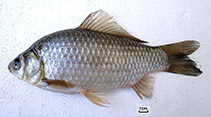
Diagnosed from its congeners in Europe by having the following characters: body silvery-brown in color; last simple anal and dorsal rays strongly serrated; 37-52 gill rakers; lateral line with 29-33 scales; freed edge of dorsal concave or straight; anal fin with 5½ branched rays; and peritoneum black (Ref. 59043).
Body shape (shape guide): fusiform / normal.
Inhabits a wide variety of still water bodies and lowland rivers, usually associated with submerged vegetation or regular flooding. Can strongly tolerate low oxygen concentrations and pollution (Ref. 59043). Lake dwelling individuals move into river mouths to avoid low oxygen water in winter (Ref. 39176). Feeding larvae and juveniles occur in high-complexity habitats as reed belts. Feeds on plankton, benthic invertebrates, plant material and detritus. Spawns in shallow, warm shores on submerged vegetation (Ref. 59043). Able to reproduce from unfertilized eggs (gynogenesis) (Ref. 41851). Life span reaches up to about 10 years (Ref. 59043). Eastern European or wild form of the goldfish (Ref. 1739).
Females spawn with several other species, for example Cyprinus carpio and Carassius carassius, but the eggs just develop without being actually fertilized resulting in a female only population (Ref. 2059). In Europe, populations considered as triploid and only females. But in some populations, it should be possible to find up to 25% of males which should be diploid (Ref. 40476). "There are also all-female populations in which all individuals are triploids. Triploids are sperm parasites of other cyprinid species such as Cyprinus carpio,
Rutilus rutilus and Abramis brama. Older individuals spawn earlier in season than younger ones. Males move to spawning sites before females. Males follow ripe females, often with much splashing. Sticky eggs are attached to water plants or submerged objects" (Ref. 59043).
Kottelat, M. and J. Freyhof, 2007. Handbook of European freshwater fishes. Publications Kottelat, Cornol and Freyhof, Berlin. 646 pp. (Ref. 59043)
ສະຖານະພາບບັນຊີແດງຂອງ IUCN (Ref. 130435: Version 2025-2 (Global))
ໄພຂົ່ມຂູ່ຕໍ່ມະນຸດ
Potential pest (Ref. 83969)
ການນໍາໃຊ້ຂອງມະນຸດ
ການປະມົງ: ທີ່ເປັນການຄ້າໜ້ອຍ
ເຄື່ອງມື
ບົດລາຍງານພິເສດ
ດາວໂຫລດ XML
ແຫຼ່ງອີນເຕີເນັດ
ການຄາດຄະເນໂດຍອີງໃສ່ແບບຈໍາລອງ
ດັດຊະນີຄວາມຫຼາກຫຼາຍທາງຊີວະພາບ (ເອກະສານອ້າງອີງ
82804): PD
50 = 0.5156 [Uniqueness, from 0.5 = low to 2.0 = high].
Bayesian length-weight: a=0.01349 (0.01151 - 0.01581), b=3.05 (3.01 - 3.09), in cm total length, based on LWR estimates for this species (Ref.
93245).
ຊັ້ນເຂດຮ້ອນ (ເອກະສານອ້າງອີງ
69278): 2.5 ±0.0 se; based on diet studies.
Generation time: 6.1 (4.7 - 6.1) years. Estimated as median ln(3)/K based on 21
growth studies.
ຄວາມຢືດຢຸ່ນ (ເອກະສານອ້າງອີງ
120179): ຂະໜາດກາງ, ປະຊາກອນຕຳ່ສຸດທີ່ໃຊ້ເວລາສອງເທົ່າ 1.4 - 4.4 ປີ (K=0.13; tm=1-4).
ຄວາມສ່ຽງຕໍ່ການຫາປາ (Ref.
59153): Moderate to high vulnerability (51 of 100).
🛈
ທາດອາຫານ (Ref.
124155): Calcium = 55.3 [22.0, 110.0] mg/100g; Iron = 0.571 [0.256, 1.173] mg/100g; Protein = 17.4 [16.1, 18.7] %; Omega3 = 0.666 [0.344, 1.334] g/100g; Selenium = 10.6 [4.7, 20.9] μg/100g; VitaminA = 20.1 [7.7, 53.5] μg/100g; Zinc = 0.738 [0.466, 1.220] mg/100g (wet weight); based on
nutrient studies.