Elasmobranchii (haaien en roggen) (sharks and rays) >
Carcharhiniformes (Ground sharks) >
Carcharhinidae (Requiem sharks)
Etymology: Carcharhinus: karcharos (Gr.), sharp or jagged; rhinus, an ancient name for sharks, from rhine (Gr.), rasp, both words alluding to a shark's jagged, rasp-like skin (See ETYFish); amblyrhynchoides: -oides, Greek suffix meaning like, resembling, having the form of: similar to C. amblyrhynchos, to which it had previously been identified (See ETYFish).
More on author: Whitley.
Milieu: milieu / Klimaatzone / Diepte / verspreidingsgebied
Ecologie
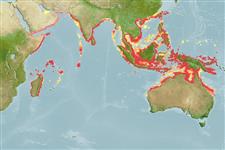
marien pelagic-neritic; diepte 0 - 75 m (Ref. 106604). Tropical; 26°N - 25°S, 43°E - 155°E
Indo-Pacific: Gulf of Aden and southwestern India east to Papua New Guinea, north to Taiwan and south to Australia.
Lengte bij maturiteit / Grootte / Gewicht / Leeftijd
Maturiteit: Lm 115.0 range ? - ? cm
Max length : 182 cm TL mannelijk / geslacht onbekend; (Ref. 106604); 167.0 cm TL (female)
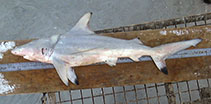
Dorsale stekels (totaal) : 0; Anale stekels: 0. Grey or grey-brown on dorsal surface, white or cream below, with a conspicuous band of white on sides from pelvic fins to first dorsal fin; pectoral, dorsal and pelvic fins, and ventral lobe of caudal fin black or dusky-tipped, sometimes inconspicuously (Ref. 9997).
Body shape (shape guide): fusiform / normal.
A little-known inshore, coastal pelagic species (Ref. 9997). Feeds mainly on fishes, also takes crustaceans and cephalopods (Ref. 6871). Viviparous (Ref. 50449). Probably taken in fisheries where it occurs (Ref. 9997). Utilized fresh and dried salted for human consumption; fins used in the oriental shark fin trade; liver oil processed for vitamins (Ref. 9997).
Viviparous, placental (Ref. 50449). 3 in a litter (Ref. 6871); 2-8 pups per litter (Ref.58048). Gestation period of 9-10 months (Ref. 6871). Size at birth 52 to 55 cm TL (Ref. 9997). Distinct pairing with embrace (Ref. 205).
Compagno, L.J.V., 1984. FAO Species Catalogue. Vol. 4. Sharks of the world. An annotated and illustrated catalogue of shark species known to date. Part 2 - Carcharhiniformes. FAO Fish. Synop. 125(4/2):251-655. Rome: FAO. (Ref. 244)
Status op de Rode Lijst van het IUCN (Ref. 130435: Version 2025-2 (Global))
Gevaar voor de mens
Traumatogenic (Ref. 4690)
Gebruik door de mens
Visserij: van minder commercieel belang
Tools
Speciale rapporten
Download XML
Internetbronnen
Schattingen op basis van modellen
Gewenste temperatuur (Ref.
123201): 24.9 - 29, mean 28 °C (based on 974 cells).
Fylogenetische diversiteitsindex (Ref.
82804): PD
50 = 0.5000 [Uniqueness, from 0.5 = low to 2.0 = high].
Bayesian length-weight: a=0.00525 (0.00244 - 0.01130), b=3.07 (2.90 - 3.24), in cm total length, based on LWR estimates for this Genus-body shape (Ref.
93245).
Trofisch niveau (Ref.
69278): 4.2 ±0.6 se; based on diet studies.
Weerstandsvermogen (Ref.
120179): Zeer laag, minimale populatieverdubbelingstijd meer dan 14 jaar (Fec=3).
Kwetsbaarheid van de visserij (Ref.
59153): Very high vulnerability (90 of 100).
🛈
Voedingsstoffen (Ref.
124155): Calcium = 24.2 [4.2, 126.5] mg/100g; Iron = 0.89 [0.23, 2.63] mg/100g; Protein = 21.6 [18.9, 24.0] %; Omega3 = 0.175 [0.070, 0.449] g/100g; Selenium = 33.3 [7.9, 100.4] μg/100g; VitaminA = 18 [6, 52] μg/100g; Zinc = 0.672 [0.310, 1.285] mg/100g (wet weight);