Ελασμοβράγχιοι (καρχαρίες και σαλάχια) (sharks and rays) >
Carcharhiniformes (Ground sharks) >
Carcharhinidae (Requiem sharks)
Etymology: Carcharhinus: karcharos (Gr.), sharp or jagged; rhinus, an ancient name for sharks, from rhine (Gr.), rasp, both words alluding to a shark's jagged, rasp-like skin (See ETYFish); amblyrhynchoides: -oides, Greek suffix meaning like, resembling, having the form of: similar to C. amblyrhynchos, to which it had previously been identified (See ETYFish).
More on author: Whitley.
Περιβάλλον: περιβάλλον / κλιματική ζώνη / εύρος βάθους / εύρος διανομής
Οικολογία
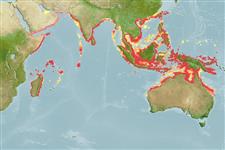
Θαλασσινό(ά) pelagic-neritic; εύρος βάθους 0 - 75 m (Ref. 106604). Tropical; 26°N - 25°S, 43°E - 155°E
Indo-Pacific: Gulf of Aden and southwestern India east to Papua New Guinea, north to Taiwan and south to Australia.
Μήκος κατά την πρώτη ωρίμανση / Μέγεθος / Βάρος / Ηλικία
Γεννητική Ωρίμανση: Lm 115.0 range ? - ? cm
Max length : 182 cm TL αρσενικό/απροσδιόριστο; (Ref. 106604); 167.0 cm TL (female)
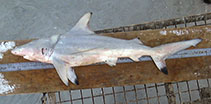
Ραχιαίες άκανθες (συνολικά) : 0; Εδρικές άκανθες: 0. Grey or grey-brown on dorsal surface, white or cream below, with a conspicuous band of white on sides from pelvic fins to first dorsal fin; pectoral, dorsal and pelvic fins, and ventral lobe of caudal fin black or dusky-tipped, sometimes inconspicuously (Ref. 9997).
Body shape (shape guide): fusiform / normal.
A little-known inshore, coastal pelagic species (Ref. 9997). Feeds mainly on fishes, also takes crustaceans and cephalopods (Ref. 6871). Viviparous (Ref. 50449). Probably taken in fisheries where it occurs (Ref. 9997). Utilized fresh and dried salted for human consumption; fins used in the oriental shark fin trade; liver oil processed for vitamins (Ref. 9997).
Viviparous, placental (Ref. 50449). 3 in a litter (Ref. 6871); 2-8 pups per litter (Ref.58048). Gestation period of 9-10 months (Ref. 6871). Size at birth 52 to 55 cm TL (Ref. 9997). Distinct pairing with embrace (Ref. 205).
Compagno, L.J.V., 1984. FAO Species Catalogue. Vol. 4. Sharks of the world. An annotated and illustrated catalogue of shark species known to date. Part 2 - Carcharhiniformes. FAO Fish. Synop. 125(4/2):251-655. Rome: FAO. (Ref. 244)
Κατάσταση Κόκκινου Καταλόγου IUCN (Ref. 130435: Version 2025-2 (Global))
Απειλή για τον άνθρωπο
Traumatogenic (Ref. 4690)
Ανθρώπινες χρήσεις
αλιεία: περιορισμένης εμπορικότητας
Εργαλεία
Ειδικές εκθέσεις
Λήψη XML
Διαδικτυακές πηγές
Εκτιμήσεις βάσει μοντέλων
Προτιμώμενη θερμοκρασία (Αναφ.
123201): 24.9 - 29, mean 28 °C (based on 974 cells).
Δείκτης φυλογενετικής ποικιλότητας (Αναφ.
82804): PD
50 = 0.5000 [Uniqueness, from 0.5 = low to 2.0 = high].
Bayesian length-weight: a=0.00525 (0.00244 - 0.01130), b=3.07 (2.90 - 3.24), in cm total length, based on LWR estimates for this Genus-body shape (Ref.
93245).
Τροφικό Επίπεδο (Αναφ.
69278): 4.2 ±0.6 se; based on diet studies.
Ελαστικότητα (Αναφ.
120179): Πολύ χαμηλό, ελάχιστος χρόνος για διπλασιασμό πληθυσμού > 14 έτη (Fec=3).
Ευπάθεια στην αλιεία (Ref.
59153): Very high vulnerability (90 of 100).
🛈
Θρεπτικά συστατικά (Ref.
124155): Calcium = 24.2 [4.2, 126.5] mg/100g; Iron = 0.89 [0.23, 2.63] mg/100g; Protein = 21.6 [18.9, 24.0] %; Omega3 = 0.175 [0.070, 0.449] g/100g; Selenium = 33.3 [7.9, 100.4] μg/100g; VitaminA = 18 [6, 52] μg/100g; Zinc = 0.672 [0.310, 1.285] mg/100g (wet weight);